How to Teach a 4-Year-Old the Difference Between Needs and Wants
At age 4, a child can understand that there are things they need, like eating, sleeping or being warm, and things they want, like a new toy. In The Child's Construction of Economics, Berti and Bombi show that young children already think about prices, stores and work, and what's missing is putting those ideas in order. What you teach is the difference between needing and wanting, not money.
How to do it
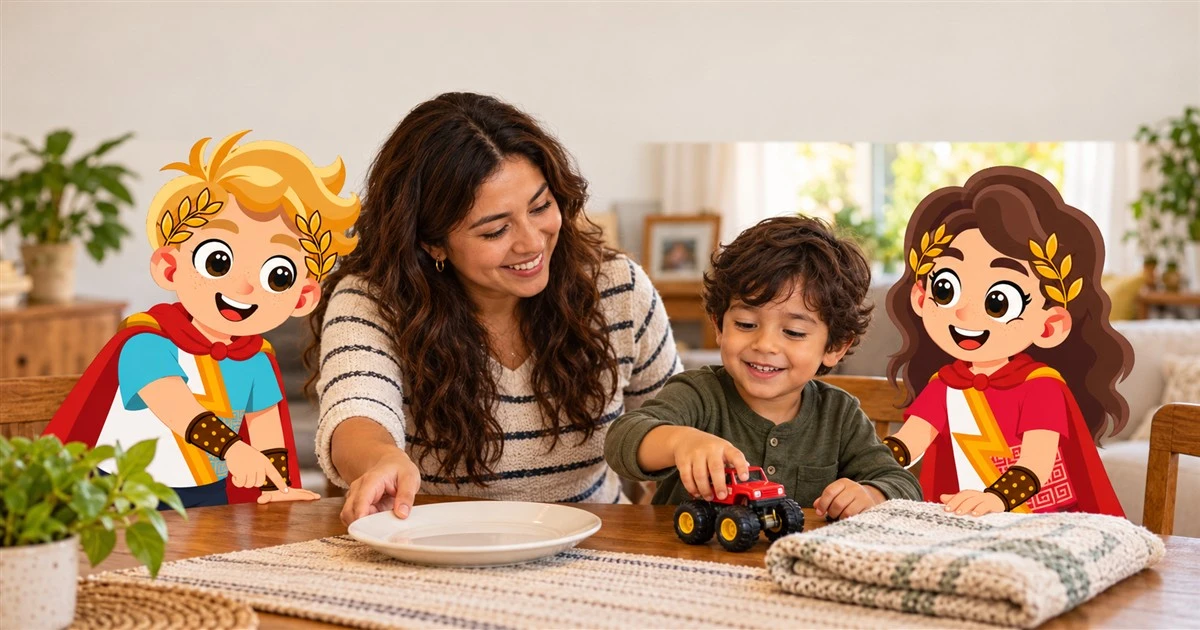
The activity uses three household objects on the table: a plate, a toy and a blanket. You ask: "Which one do we need to be well? Which one is for playing?" The child sorts them with their hands. A few phrases help: "We need the plate to eat," "The toy is something we want, and it's fine to want it," "We can wait for the birthday for that toy."
What it's for
For your child, the difference between what they need and what they want becomes something they can name, and wanting something stops feeling like a lack. For you, when they say something is needed and it isn't, you no longer have to correct them right away: it's enough to ask "what would happen if we didn't have it today?"
What the research says
What doesn't help is saying that wanting something is bad or making them feel guilty. Ron Lieber, in The Opposite of Spoiled, argues that wanting is normal and that what gets educated is choosing. You teach deciding, not avoiding.
Walter Mischel, in The Marshmallow Test, showed that preschoolers wait better when they have a strategy. So it helps to offer one: "While we wait for your birthday, shall we draw it?"
What you'll see over time
In the first weeks the child mixes up the categories: the favorite toy may show up as a need. Between one and six months they sort objects without help and ask themselves whether something is needed before asking for it. In the long run they tell those ideas apart at the supermarket and in daily life.
Signs it's working
It's working when they separate what serves for living from what serves for playing, when they wait with a drawing or a plan and when they ask themselves whether something is needed.
Tell need and want apart as two different ideas.
Ask whether something is needed before asking for it.
Sort objects by whether they are for living or for playing.
"We need it to live, we want it to enjoy."
Most common error