Financial Education for Kids in the U.S.: What Schools Teach
In the United States, financial education in school varies by state, district and teacher. The Council for Economic Education periodically publishes a state-by-state survey that shows it. Some schools teach it strongly and others leave it for later.
How to do it
What's often missing is daily practice. A child learns what income is, but doesn't get the chance to decide with one. Applying an idea to a new situation is the hardest part of learning, and Brown, Roediger and McDaniel, in Make It Stick, point to it as one of the big challenges of learning. That's why practice at home weighs so much.
At home you complement it like this: when you buy something, you explain why; you give one small decision each week; and you talk about what the child learned in class and how it applies at home. Ron Lieber, in The Opposite of Spoiled, recommends talking about money with kids from an early age and naturally.
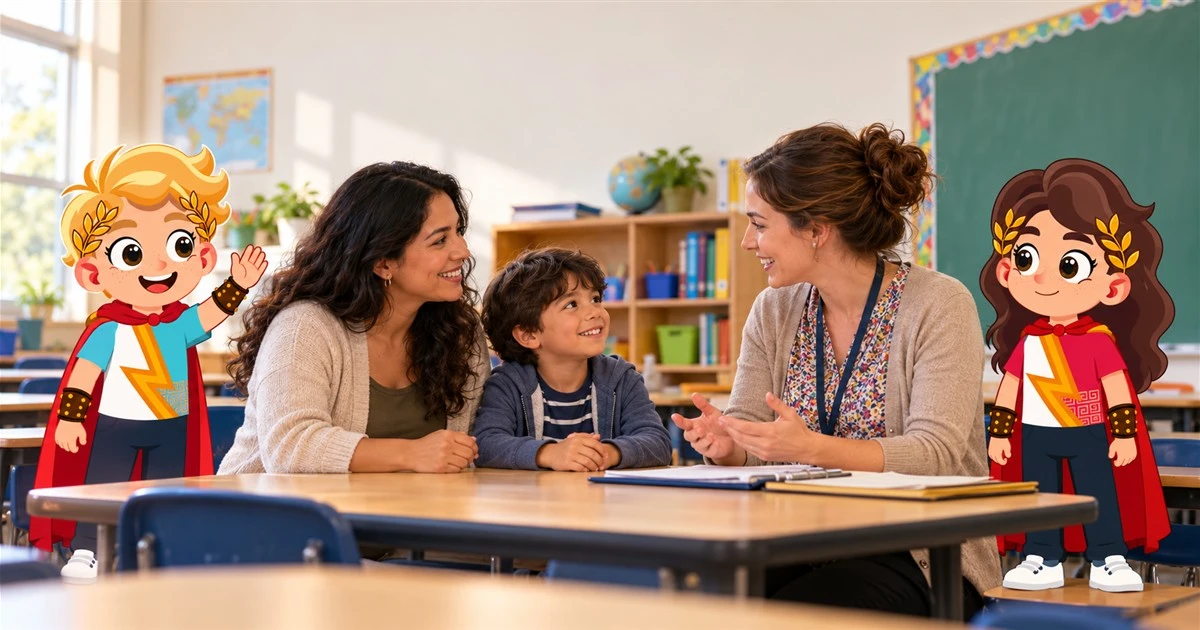
At school, ask the teacher what is taught about money, at which grade and with what materials. That information helps you avoid repeating what they already know and reinforces what they're seeing. Many teachers appreciate families who practice the same ideas.
What it's for
For your child, school and home stop teaching separate things: the idea they see in class shows up in a real purchase. For you, the question stops being whether school teaches money and becomes which class idea you can practice this week.
What you'll see over time
In the first weeks the child may connect the class idea with home in a muddled way. Between one and six months they connect what they learned at school with a decision of their own. In the long run school provides the idea and home provides the practice, and the child uses them together.
Signs it's working
It's working when the child mentions a class idea at home, when they apply something they saw at school to a purchase and when the teacher and you use the same words.
Understand that school gives the idea and home gives the practice.
Connect a class idea with a real decision each week.
Talk with the teacher about the topic.
"School gives the idea and home gives the practice."
Most common error