How to Teach a Child to Save Without Lectures
Saving is an abstract idea for a child: they don't understand why wait when they can buy something today. A lecture doesn't change that, a visible goal does. Here's how to set it up, what it's for and what to expect.
How to do it: four steps
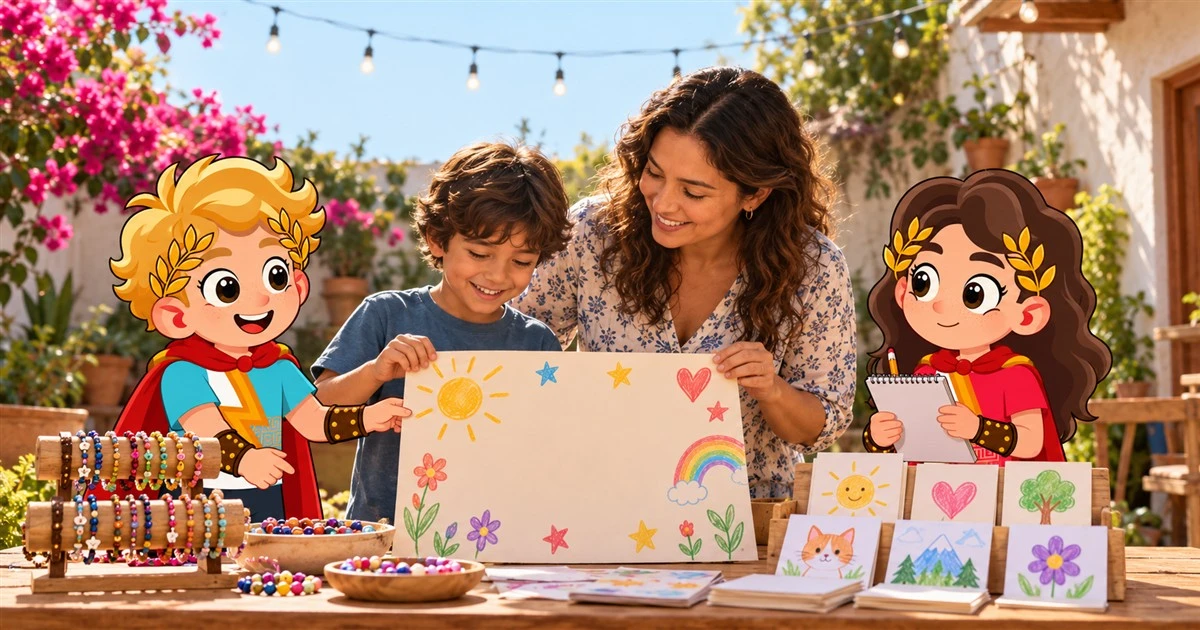
- Let them choose the goal. "What would you like to have in a few weeks?" A game, a book or a trip to the park. Make it theirs.
- Give it a name and a realistic date. "My game, in six weeks." If the goal is very big, split it into steps: each step reached is a visible win.
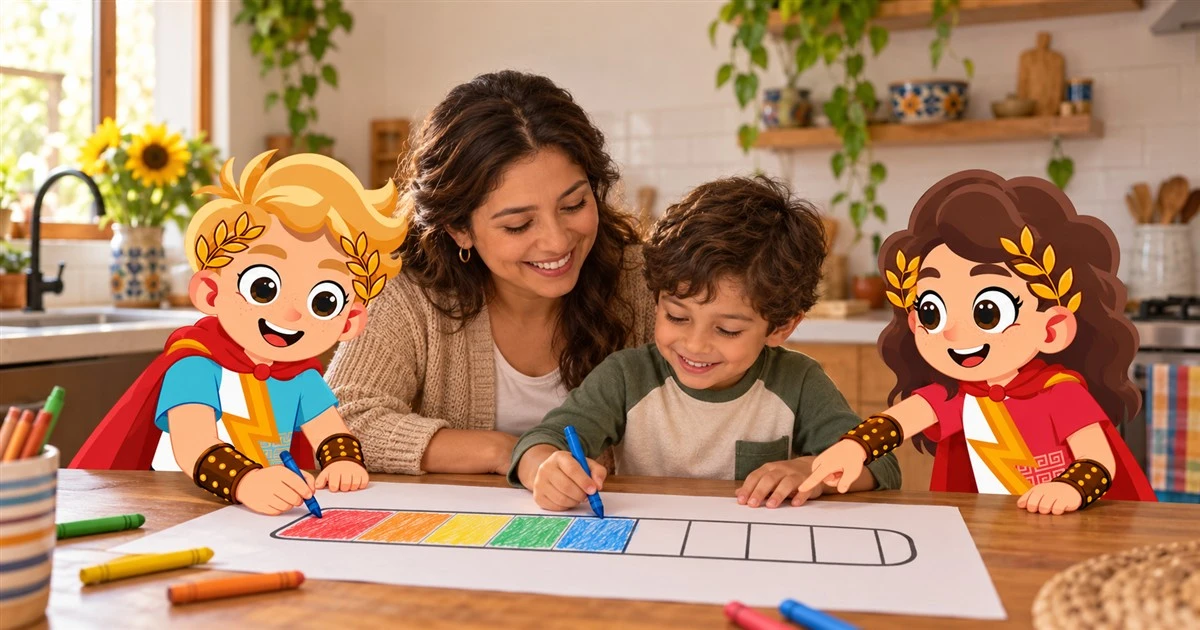
- Draw a bar on a sheet and color a piece each time they save a part.
- Review each week, without blame if progress was small: "You colored two parts. What helped you save?"
What it's for
For your child: it turns an empty wait into a path with progress. They feel capable, proud to see the bar grow, and waiting stops feeling like punishment. For you: you replace the lecture with a board that speaks for itself; fewer arguments and none of that "you'll never have anything" nobody wants to say.
What the research says
In Walter Mischel's experiments with preschoolers (The Marshmallow Test), children waited better when they had a strategy and a clear picture of what was coming. Teresa Amabile and Steven Kramer (The Progress Principle) found at work that seeing small steps forward is among what motivates most, and James Clear (Atomic Habits) calls it making the habit satisfying. The Dunedin study (Moffitt and colleagues, 2011) followed a generation from childhood and associated early self-control with better health and economic situation in adulthood.
What you'll see over time
- First weeks: they want to color the bar and ask how much is left.
- Three to six months: they reach the goal and choose the next; they resist an impulse better because they have a target.
- Long term: the habit of waiting for something you want more is the base of adult saving.
Signs it's working
They say "no, I'm saving it" without being reminded; they check the bar on their own; and they celebrate progress. If they lose interest, shorten the goal to two weeks: a goal reached is worth more than one abandoned. And avoid comparing them with other kids: saving is learned with practice and encouragement, not fear.
Understand that saving means waiting for something they want more.
Save part of what they receive and check progress.
Choose and name a goal of their own.
"Every time you save, you get closer to your goal."
Most common error