📝
5-12 years
4 min
0
Kids' Finances Duolingo Style— The Key is Play
If your child loves Duolingo, imagine if they learned about money with the same excitement! Discover how to apply its magic at home.
Oh, financial education for children... Sometimes it sounds like a math assignment, right? We worry about teaching them the value of money, but how do we make it not boring? How do we prevent it from becoming that tedious class nobody likes? Here's a secret: the answer might be in that language app many people love, Duolingo! Do you know why it's so addictive?
Why does Duolingo keep us all hooked?
Think about Duolingo. It doesn't ask you to read a giant grammar book. It gives you short lessons, like mini-games. It challenges you, rewards you with points, congratulates you when you get it right, and gives you another chance if you make a mistake. It even reminds you if you forget to practice! It's gamification at its best, where learning feels like playing.- Micro-lessons: Content in small, easy-to-digest pieces.
- Instant rewards: Points, badges, streaks. They celebrate every achievement.
- Spaced repetition: Reinforce what's learned just when you need it.
- Visible progress: You see your advancement, and that motivates you to continue.
Bringing Duolingo's magic to home finances
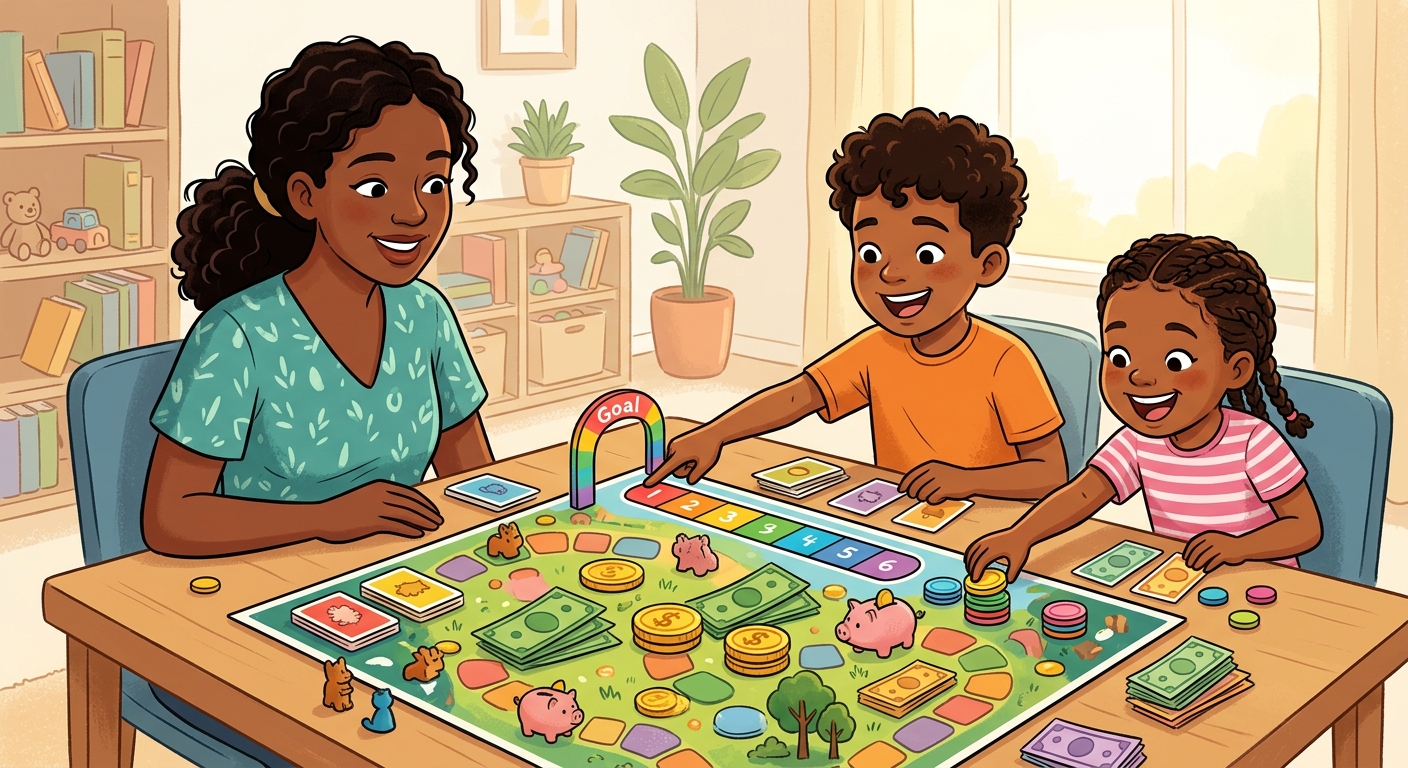
What if we applied that same spark to financial education? Imagine money not as a dense topic, but as an adventure where every step counts. Studies show that playful learning is much more effective, especially for children. Here's how to do it: * **Mini-money missions**: Instead of a long lecture, give them short "missions." "Today, your mission is to research how much that toy you want costs." Or "Let's see what you can buy with 5 dollars." * **Points and reward system**: Create a system where they earn "financial points" for chores or smart decisions (saving for something, comparing prices). These points can be redeemed for something they value (extra playtime, a trip to the park). * **Celebrate every "streak"**: If they saved for a week, celebrate it! Acknowledge their effort with words or a small incentive. Consistency is key, just like Duolingo's "streaks." * **Visualize their progress**: Use a board, a clear piggy bank, or our Ploutus Lab app, where they can see their money grow or how close they are to their goal. Seeing progress is a great motivator. Teaching finances doesn't have to be a struggle. It can be a fun, achievement-filled adventure, just like learning a new language. Let's transform money learning into a game they'll want to keep playing!How to do it
1
Identify a savings goal with your child, no matter how small.
2
Create a simple points system to reward good financial habits.
3
Assign daily or weekly "mini-missions" related to money.
4
Use a clear piggy bank or a visual chart to track progress.
5
Celebrate every achievement and every "streak" of good money management.
What they are learning
Skill
Learn to set and achieve financial goals
Knowledge
Understand the value of saving and conscious spending
Attitude
Develop a positive and playful relationship with money
Guiding phrase
"Learning about money can be as fun and addictive as your favorite game— you just need the right rules!"
Most common error
Many parents try to teach finances with long lectures or prohibitions, making money feel like a heavy and boring topic for children.
Keep practicing
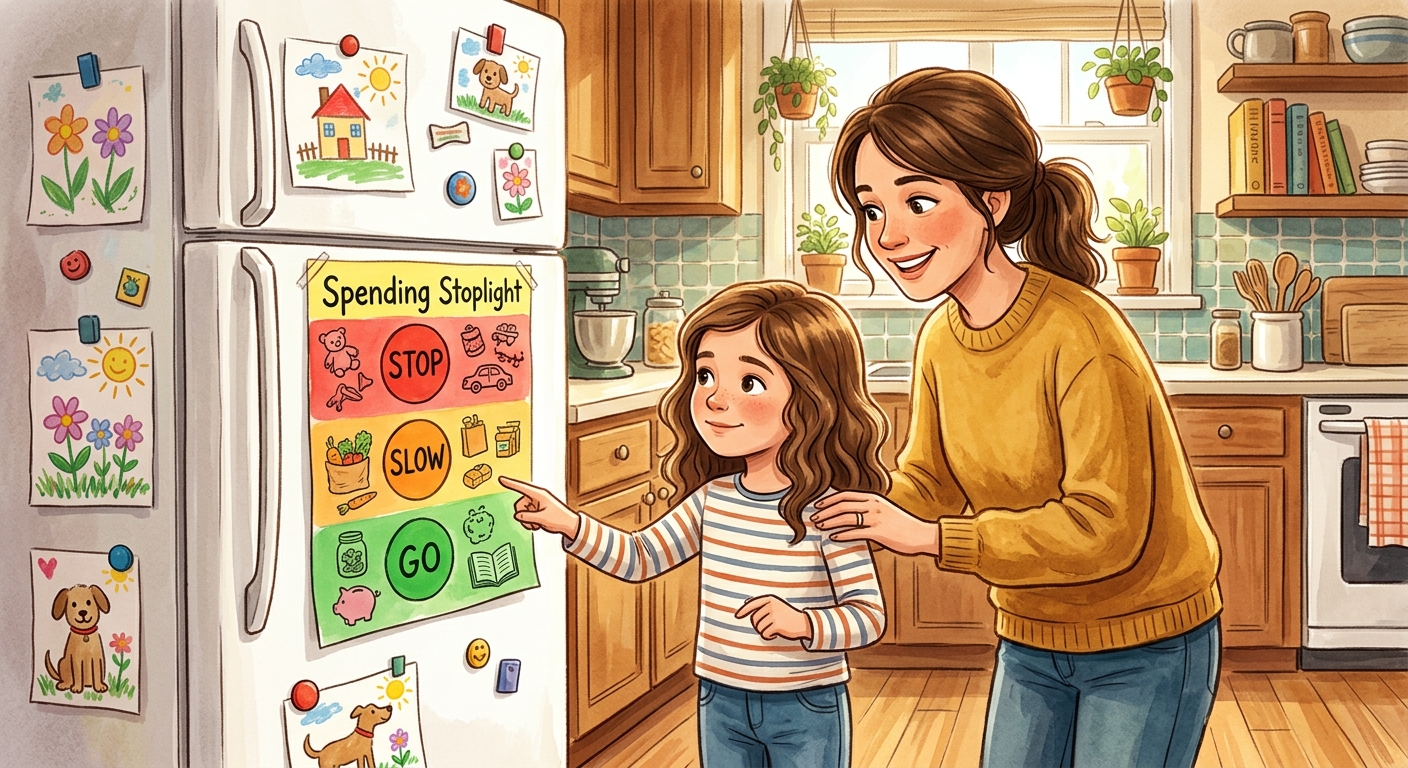
The Spending Stoplight— an easy guide for kids (and parents)!
3 minutes · 7-10 years
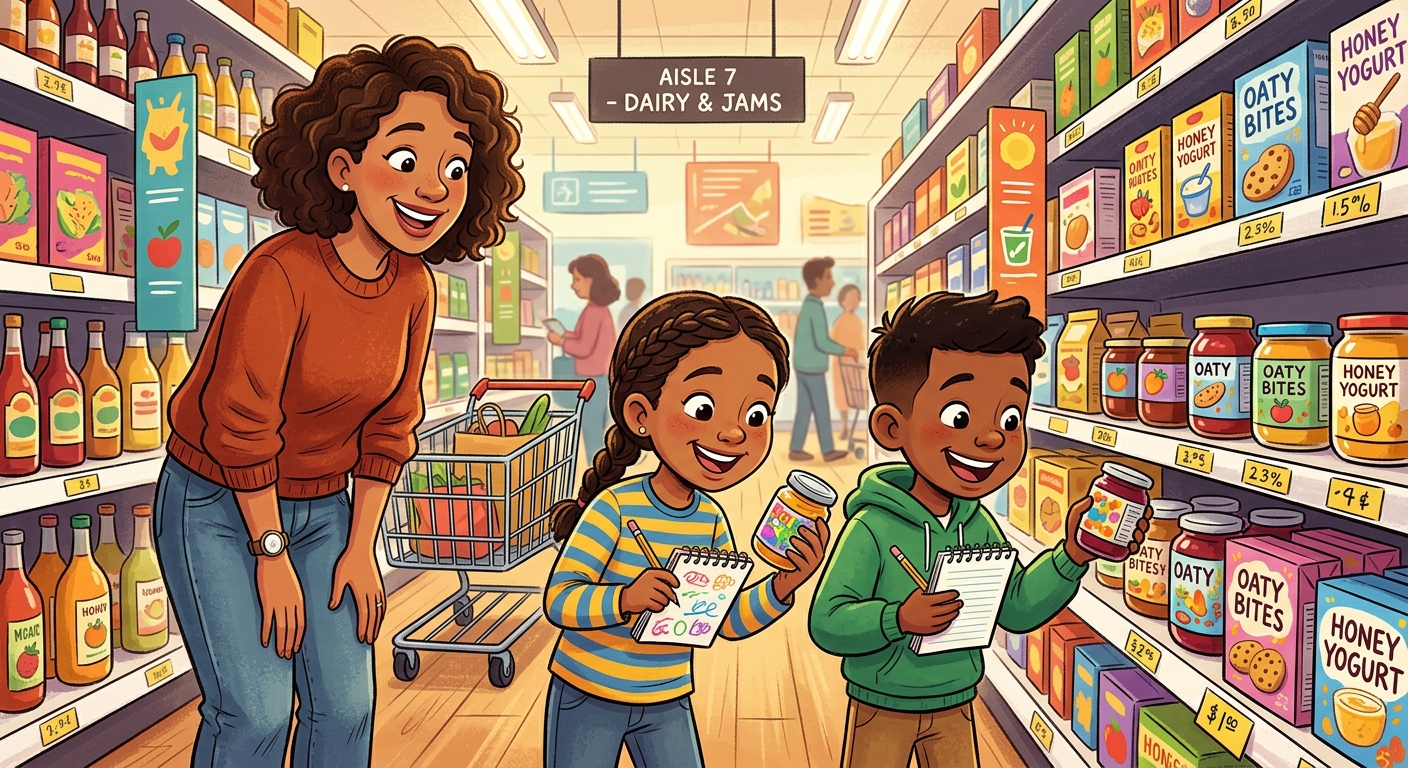
The Magic Supermarket: Price Detectives and the Art of Saving
3 minutes · 7-10 years
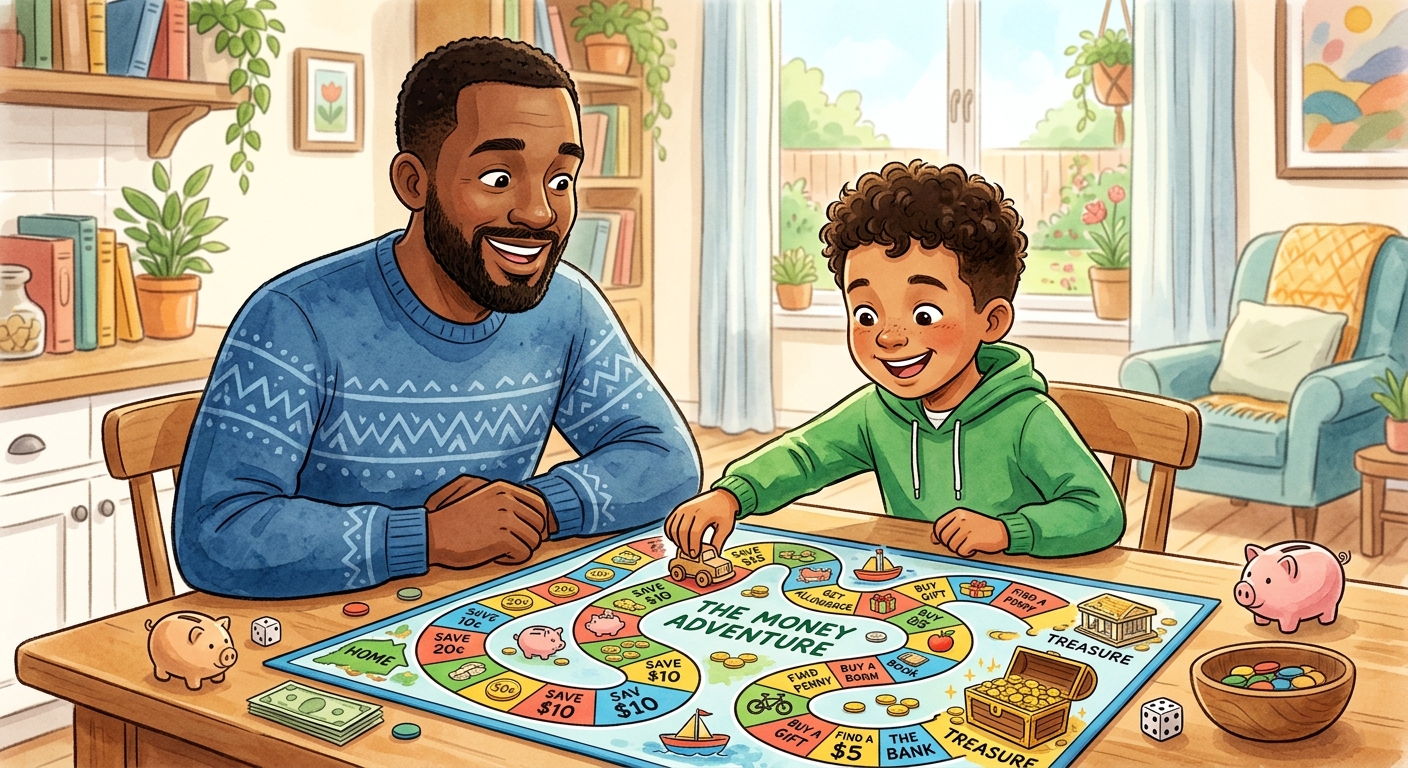
The Goal Race — Saving Money is More Fun When It's a Game
4 minutes · 7-10 years
Back to blog
