Siblings Who Fight Over Everything: 3 Things You Can Change Today
Fights between siblings wear anyone out, and they're normal. Adele Faber and Elaine Mazlish (Siblings Without Rivalry) argue that you shouldn't declare a winner: you should listen to both. There are three changes you can start today.
How to do it: three changes
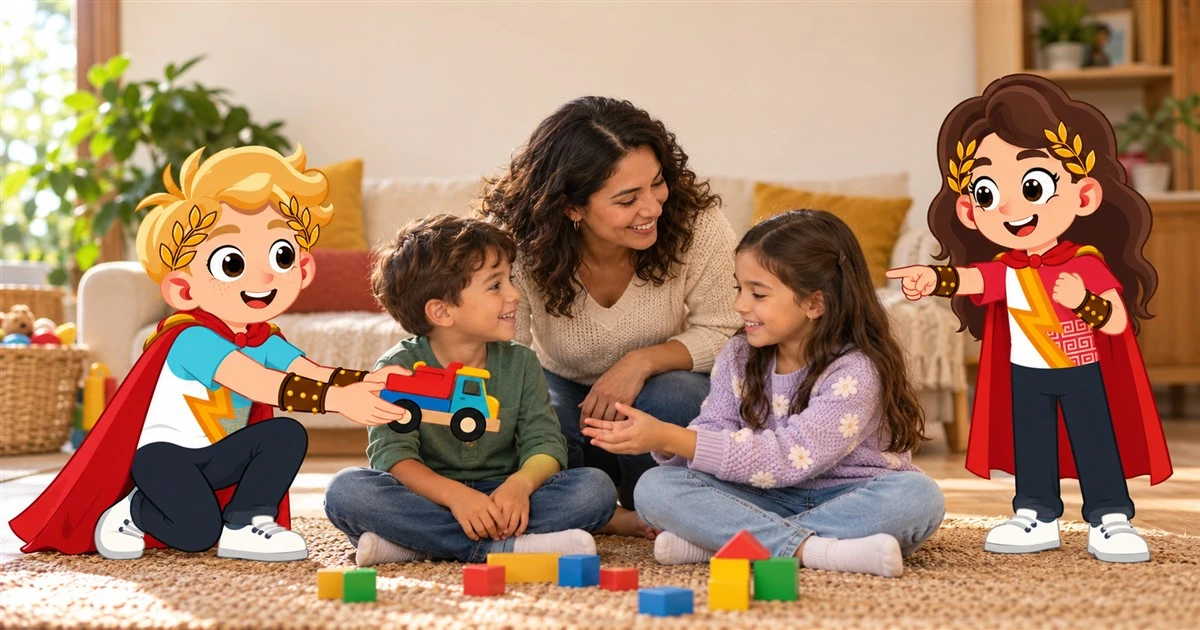
- Set a turn rule before the activity: "First you for five minutes, then your brother." A prior rule prevents the dispute.
- Listen to each one without interrupting: "Tell me your side." Faber and Mazlish recommend acknowledging what each feels without taking sides.
- Ask what each can do to fix it: "What could each of you do?" The solution comes from them, not from you.
And praise out loud when they share: "I saw you gave up your turn. That was generous."
What it's for
For your children: they learn to negotiate and resolve without winning or losing; they feel heard, and less compared. For you: you step out of the judge role; fewer shouts and less wear. Jane Nelsen (Positive Discipline) proposes that children learn to resolve with support, not punishment.
What the research says
Faber and Mazlish warn against comparing siblings because it breeds resentment. Daniel Siegel and Tina Payne Bryson (No-Drama Discipline) propose connecting with each child before redirecting. And sharing turns and solutions builds the negotiation skills they'll use with money.
What you'll see over time
- First weeks: fights continue, but some get resolved faster with the turn rule.
- One to three months: they ask for turns on their own and propose solutions.
- Long term: siblings who know how to negotiate and share, the base of decisions in relationships, work and money.
Signs it's working
Fewer shouts; one of them proposes a deal; and they play together again after fighting. If a fight is physical, separate them first and talk after.
Share and take turns with clear rules.
Understand that sharing resources is a way of deciding as a family.
Listen to the other's version and propose a solution.
"We listen to both first, and then we look for a solution together."
Most common error