How Your Child Can Teach a Younger Sibling What They Learned
Teaching is one of the best ways to learn. Fiorella and Mayer (2013) showed that people who prepare to teach a topic and then explain it remember more than people who only study it. When a child explains an idea to a younger sibling, they have to put it in their own words, and that fixes it. Bandura showed that children copy a lot from those who are close to them, and siblings are a model they watch every day.
How to do it
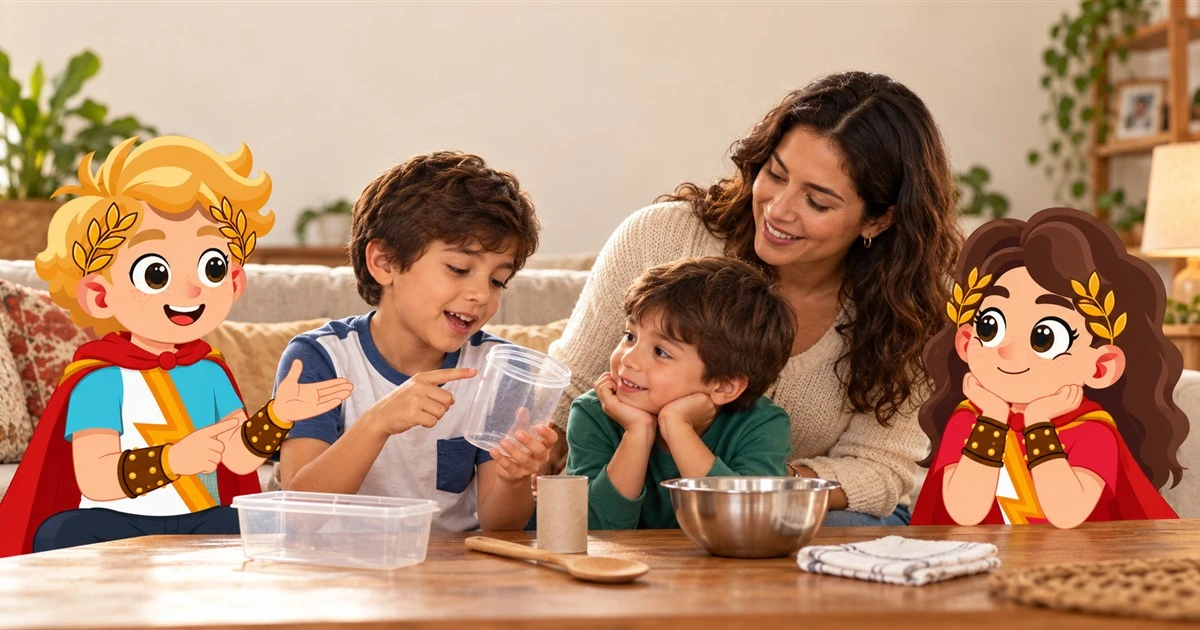
The mini class lasts two minutes. The older child picks an idea they understand well, for example "income is what you receive for what you do." They explain it with household objects: toys, a cereal box, a notebook. The younger one says in their own words what they understood or gives an example from their day. You close with one line that recognizes both: "Thanks for explaining it so well. Now you both understand it."
Now and then it helps to switch roles. Sometimes the little one remembers a detail the older one forgot, and that gives them a place too.
What it's for
For the older one, explaining reinforces what they know and gives confidence. For the younger one, the explanation arrives in a language close to theirs, often easier to understand than an adult's. For you, the mini class is a way to review without being at the front.
What the research says
It shouldn't be turned into a competition or an exam. In Siblings Without Rivalry, Adele Faber and Elaine Mazlish insist on not comparing siblings, because comparison breeds resentment and not learning. The older one doesn't correct harshly, and the younger one can say "I didn't get it" without shame.
What you'll see over time
The first few times the older one may explain very briefly and the younger one may not ask anything. Between one and six months the explanations get longer and the younger one starts contributing examples. In the long run learning is shared as a normal thing between siblings.
Signs it's working
You know it works when the older one explains without help, when the younger one answers in their own words and when neither corrects the other harshly.
Understand that teaching fixes what was learned.
Share what they learn with the family.
Explain an idea in their own words to another person.
"Explaining it to someone else is the best way to understand it."
Most common error