How to Invite Another Mom to Ploutus Lab Without Awkwardness
Recommending something that helped is one of the most natural things between moms. What makes it awkward is pressure. Jonah Berger, in Contagious, explains that people share what is useful and what comes inside a story, not what sounds like an ad. Robert Cialdini, in Influence, shows that it weighs a lot to see that people like us already did it.
How to do it
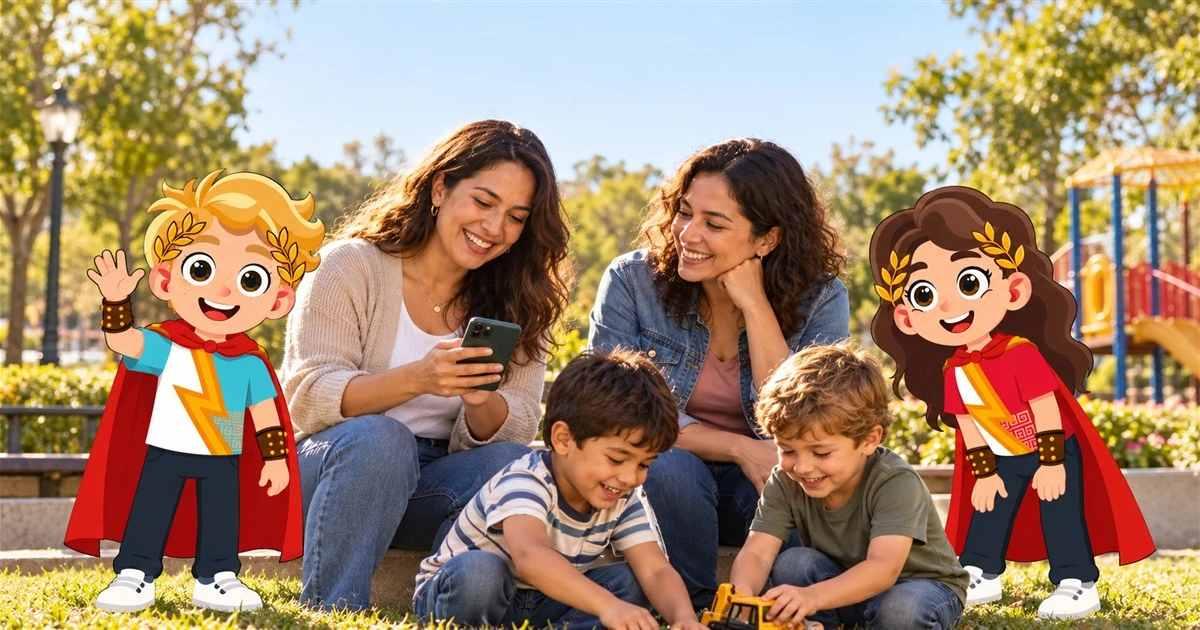
There are three ways to say it. In person, at school pickup, you can tell what happened at your home: your child watched a four-minute class and that night asked you why the store charges for things. By text, you can share the free class link with the phrase "no strings attached." In a group, it helps to tell a scene and not the product: "Today my daughter explained what income is using the lemonade stand."
What you avoid is pressuring, saying her child will "fall behind" or promising results. A line like "this will change your child's life" sounds like an ad and pushes people away.
If the other mom says no, you thank her anyway and don't push. She may try it in three months or may already have another way to teach money. What stays is that you were honest.
What it's for
For your child, what you tell of their experience is a real story and not an argument. For you, the invitation is a conversation between moms with a concrete detail, not a sales task.
What you'll see over time
In the first invitations it helps to say only what you saw. Over time, the moms who tried it can also tell their experience, and that sustains the conversation without you having to insist.
Signs it's working
You know the invitation worked when the other mom asks concrete questions, when she tries the free class or when she tells you she'll think about it without you having pressured.
Understand that a personal experience persuades better than a promise.
Respect another person's decision.
Recommend something with a scene and without pressure.
"Sharing what worked for us is the best way to invite."
Most common error