📝
7-10 years
3 min
0
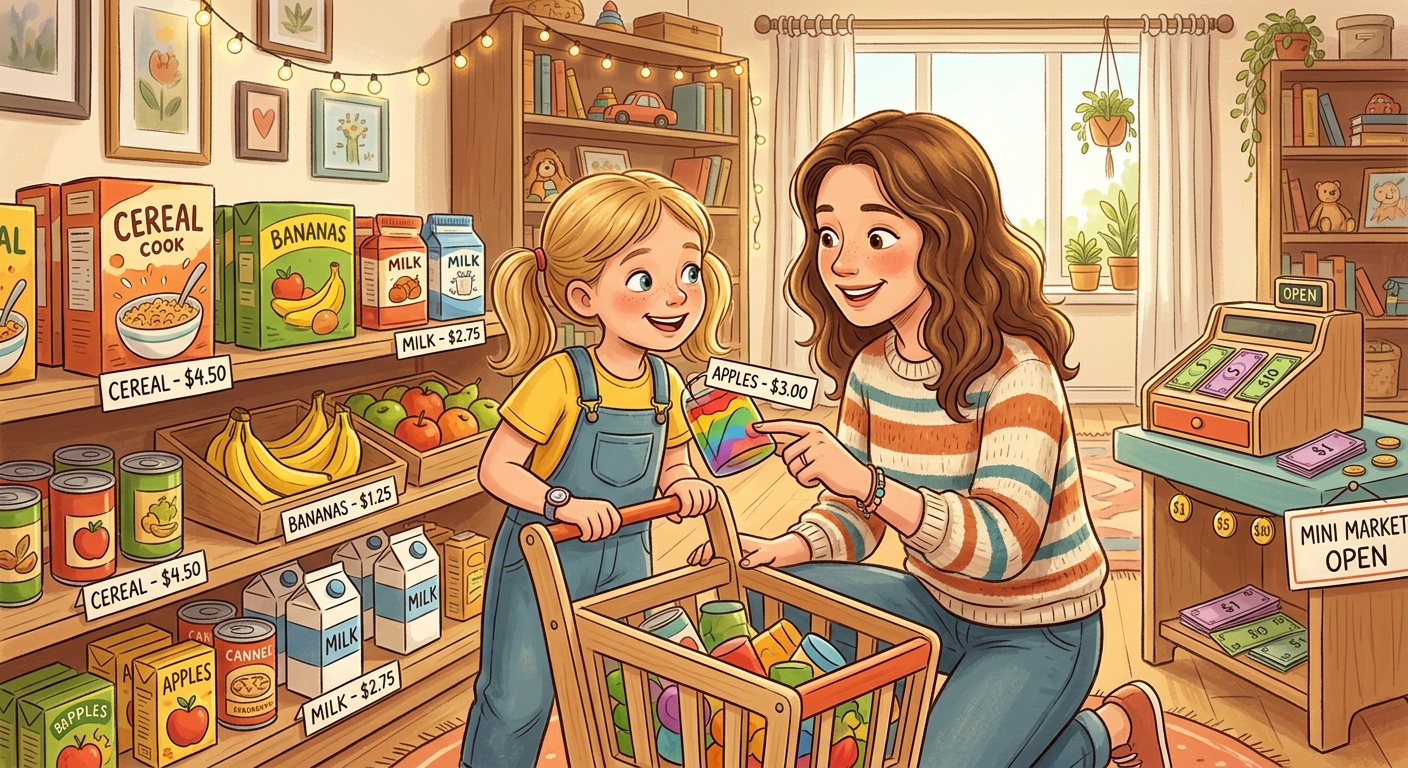
Home Supermarket Game: Teach Your Child Conscious Shopping!
Does your child ask for everything at the store? Turn frustration into learning. With this game, your little one will learn to shop smartly and within a budget.
"Mom, I want this! Dad, buy me that!" Does that sound familiar? It's the soundtrack to every supermarket visit. And no wonder, the aisles are full of temptations. But what if your child not only asked but *chose* wisely?
The good news is, it's possible. It's not about prohibiting, but about teaching prioritization. According to studies from Cambridge University, financial habits are formed as early as 7 years old. It's the perfect time to start! And the best classroom might just be... your own home!
The Smart Cart Challenge: Let's Play!
Imagine a supermarket where your child is the purchasing manager. This game is not only fun, it's a powerful tool for them to understand the value of money and learn to make conscious decisions.What you need for this game:
- A fictional budget.
- A list of "needs" (not wants!).
- Household products (or drawings) with "prices" assigned by you.
Steps to Becoming a Shopping Expert
Here's how to set up your home supermarket and turn your child into a stellar shopper:- **Step 1: Assign a budget.** Give your child a fictional amount of money, for example, $20. Explain that this is all the money they have to spend.
- **Step 2: Create a needs list.** Ask them to make a list of 5 to 7 products their "family" *needs*. Encourage them to think about basics: food, toiletries.
- **Step 3: Price everything.** Assign prices to real (or drawn) products in your home. For example: milk $3, bread $2, apples $4, toothpaste $5.
- **Step 4: Go shopping!** With the "money" and the list, let your child "shop." Observe their decisions. Ask them: "Why did you choose this first? Do you have enough for everything? What would you do if you don't have enough?".
- **Step 5: Reflect together.** At the end, review the cart. Did they go over budget? Did they miss anything important? Talk about the decisions, the surpluses, and the lessons learned.
How to do it
1
Assign a fictional budget
2
Create a list of necessary products
3
Assign prices to household items
4
Let the child "shop" and explain their decisions
5
Reflect together on purchases and budget
What they are learning
Skill
Learns to manage a budget
Knowledge
Differentiates between needs and wants
Attitude
Develops spending awareness
Guiding phrase
"Teaching how to shop is more than spending — it's learning to prioritize and make smart money decisions"
Most common error
Many parents just say 'there's no money' without explaining the 'why' behind purchasing decisions, leaving children without understanding the real value of things
Keep practicing
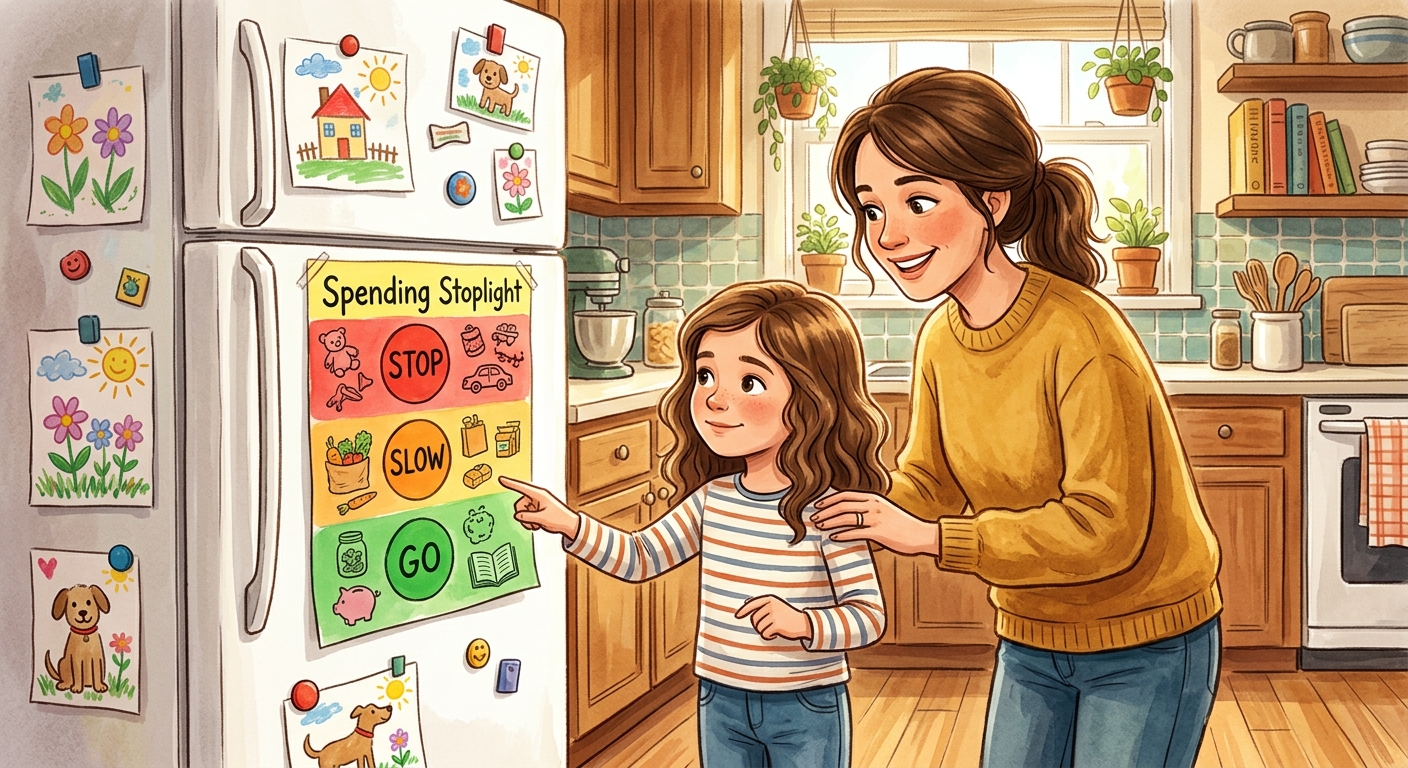
The Spending Stoplight— an easy guide for kids (and parents)!
3 minutes · 7-10 years
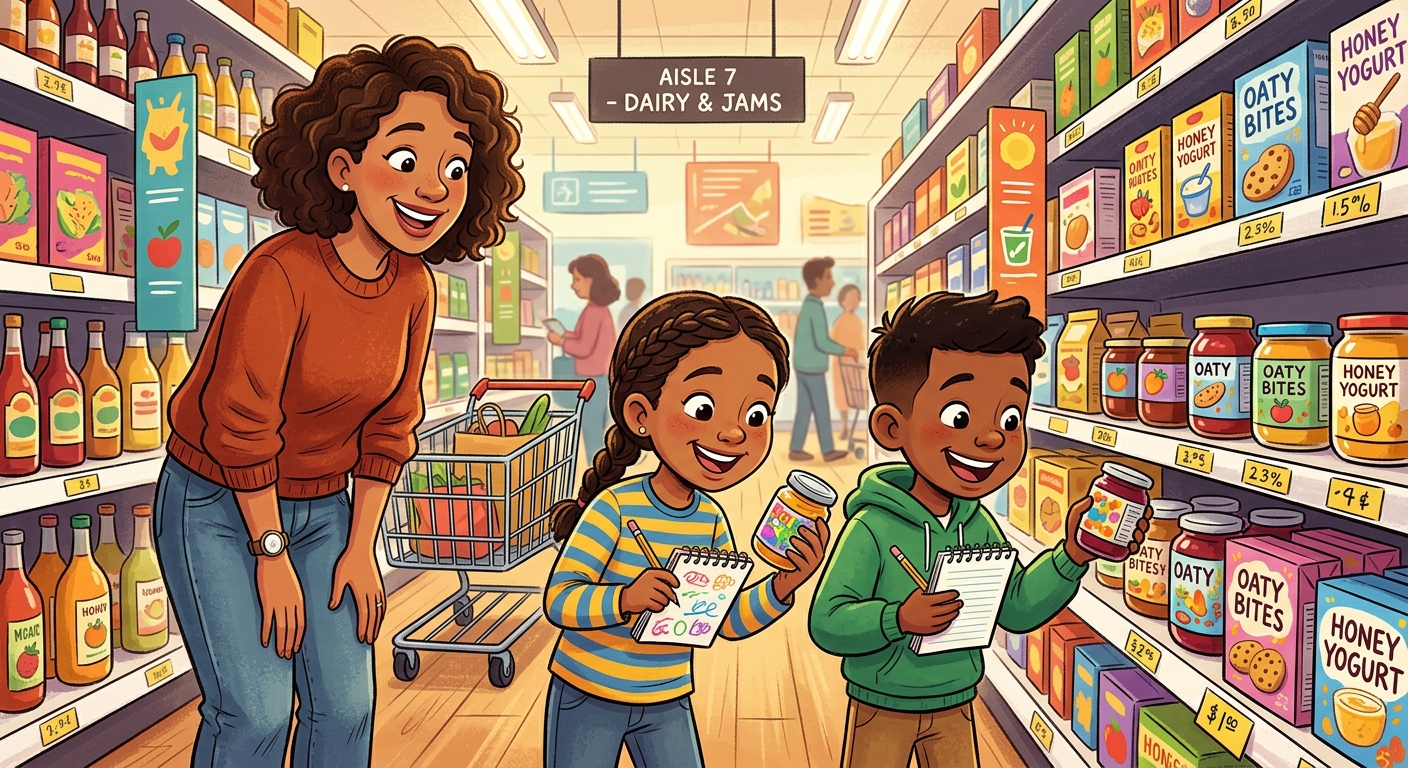
The Magic Supermarket: Price Detectives and the Art of Saving
3 minutes · 7-10 years
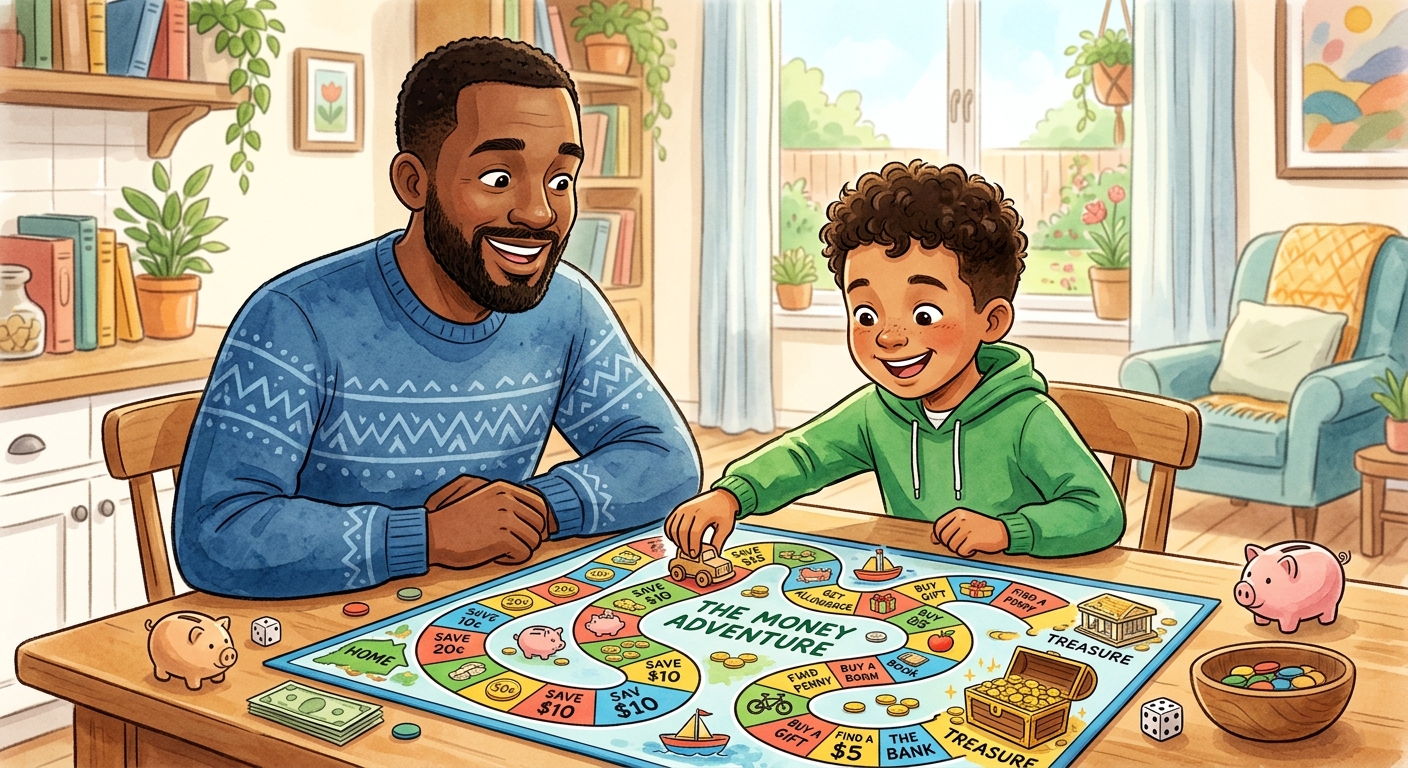
The Goal Race — Saving Money is More Fun When It's a Game
4 minutes · 7-10 years
Back to blog
