Games to Learn Saving at Home, Without Buying Anything
Saving is learned by playing, and you don't need to buy anything. Walter Mischel, in his experiments with preschoolers told in The Marshmallow Test, found that the children who managed to wait used strategies like thinking about something else or imagining the treat differently. These games give a child those same strategies in a home setting.
How to do it
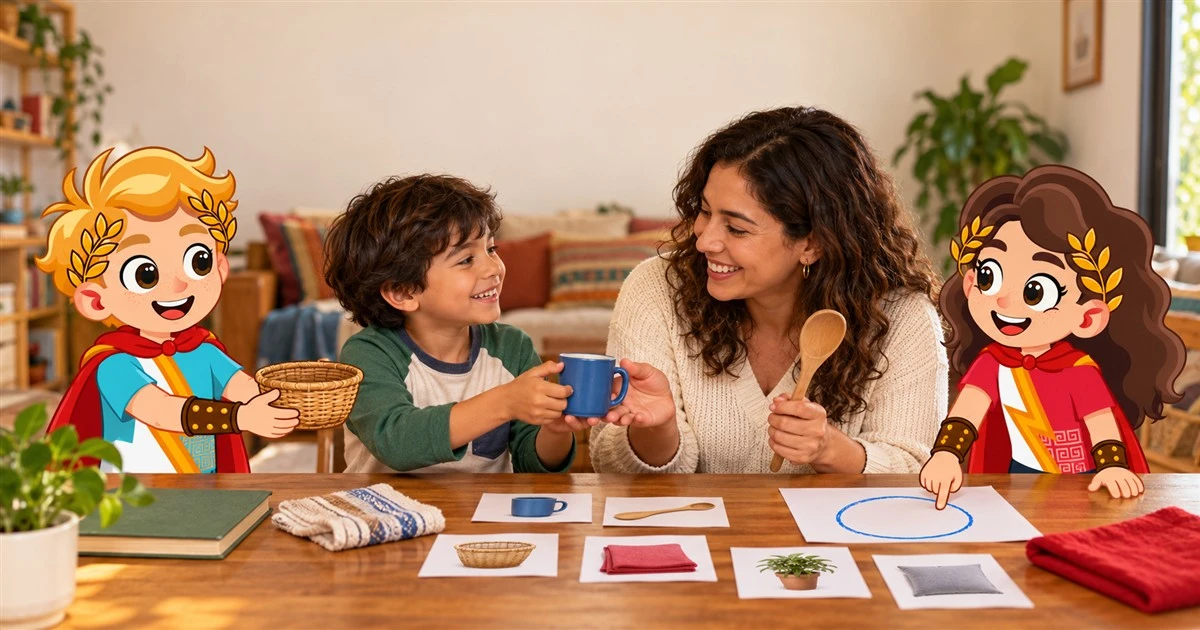
The first game is the goal of the week: you write on a sheet something your child wants, and each day they move toward it they color a piece of a circle. When the circle is full, the goal is reached. The second is the no-spending challenge: one day without buying, and each want is written down instead of asked for. At the end of the day, they review the list and decide which ones were needed. The third is the trading shop: household objects with prices on cards, and the child chooses what to trade and explains why.
Change the game each week to practice the same idea from different angles. There's a reason to avoid bought prizes as a reward for saving: Lepper, Greene and Nisbett (1973) showed that an outside reward can switch off interest. In these games, the reward of saving is reaching the goal.
What it's for
For your child, waiting stops being a void because they have something to do with their hands and can see their progress. They feel capable when the circle fills. For you, the "no" becomes part of a game and loses its tone of punishment.
What you'll see over time
In the first weeks the child wants to change the goal every day; keep the same one for a couple of weeks. Between one and six months they start proposing goals of their own and saying "I don't need this" before you say it. In the long run they save for the satisfaction of arriving, not because someone gave them a prize.
Signs it's working
It's working when they write down what they want before asking, when they explain why something isn't needed and when they reach their goal without being reminded.
Understand that saving also brings a reward: reaching the goal.
Write down what they want before asking.
Explain why something is or isn't needed.
"The reward of saving is reaching the goal."
Most common error