Money Books for Kids in Spanish: A Guide to Choosing
A good money book for kids is one with a character who decides something and leaves a question for afterward. What happens while reading weighs as much as the book: reading with pauses and questions turns a story into a conversation about money.
How to do it
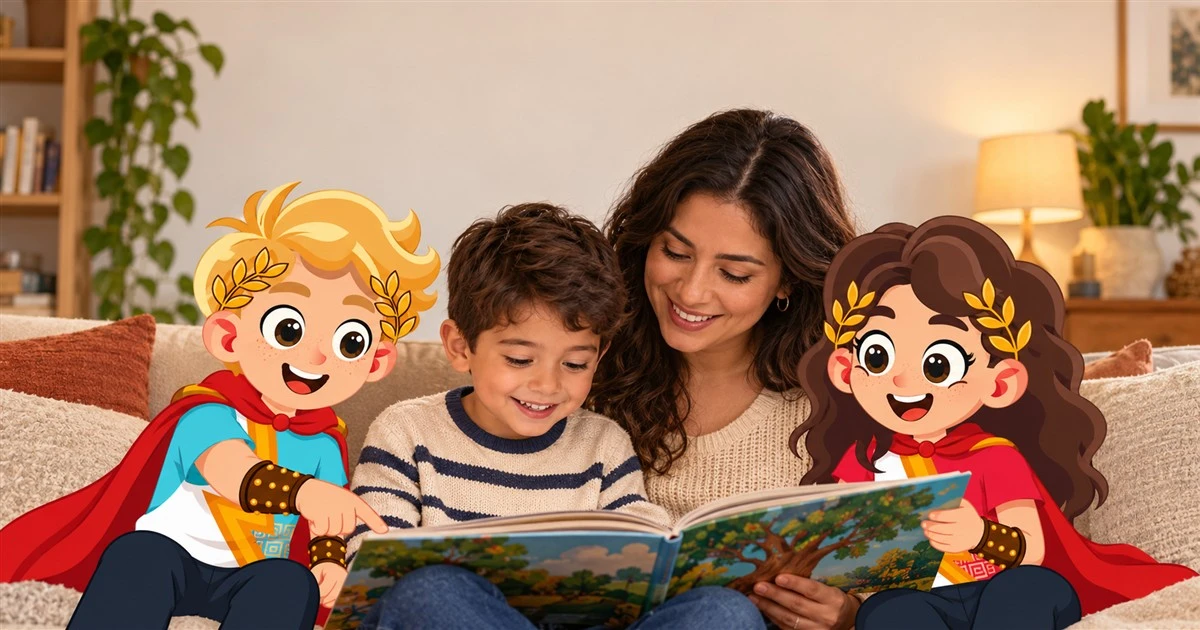
Before buying, check five things: that the text fits the age, that there's a character with a dilemma, that it comes with questions or activities, that the language sounds natural and that the families and scenes look like your child's. When reading, stop once before the character's decision: "What do you think they'll do with what they have?" Listen without correcting and keep reading. At the end, have them tell the story in two or three sentences. That week, find a real moment that resembles the book's and name it: "This is like when the character had to wait."
The practical rule is one book a month, read two or three times. Read that way, it teaches more than five books read once.
What it's for
For your child, deciding inside a story is a rehearsal without risk. They feel heard when they give an opinion and proud when they guess the ending. For you, you talk about money without lectures and in your own language; the story does the hard work and you ask.
Grover Whitehurst and colleagues developed dialogic reading, in which you ask open questions and let the child tell part of the story while reading. In their studies, children who read this way took part more and expanded their vocabulary more than those who only listened. In The Opposite of Spoiled, Ron Lieber proposes using stories to open money conversations from an early age. Bandura, Ross and Ross (1961) describe learning by observation, and a character who decides works as a model.
What you'll see over time
In the first weeks the child wants to finish fast and not respond; make just one pause per reading. Between one and six months they anticipate the pauses and ask "so what is he going to do?" In the long run they link stories to their life and ask for new books with dilemmas.
Signs it's working
You'll notice when they ask to reread the book, when they quote the character in a real situation and when they explain a decision with "because." If they're not interested, change books: maybe the pictures or the age weren't right.
Understand that a character's decision also teaches.
Read about money one book a month, two or three times.
Tell a story in their own words.
"Reading with pauses and questions turns a story into conversation."
Most common error
Try it here too
To keep going at home: the illustrated book Beyond Money and the workbook Be a Real Hero have activities to repeat what you read. https://a.co/d/079Rfq6C · https://a.co/d/0g6BVfUK