“Mom, Why Don't We Have That?”: Honest Answers for Kids Aged 4 to 10
When your child asks "why don't we have that?", they're not asking for a bank account: they're asking for an explanation. Ron Lieber (The Opposite of Spoiled) devotes a chapter to this kind of question and proposes being honest with kids about differences between families, without shame or oversharing.
How to do it: four steps
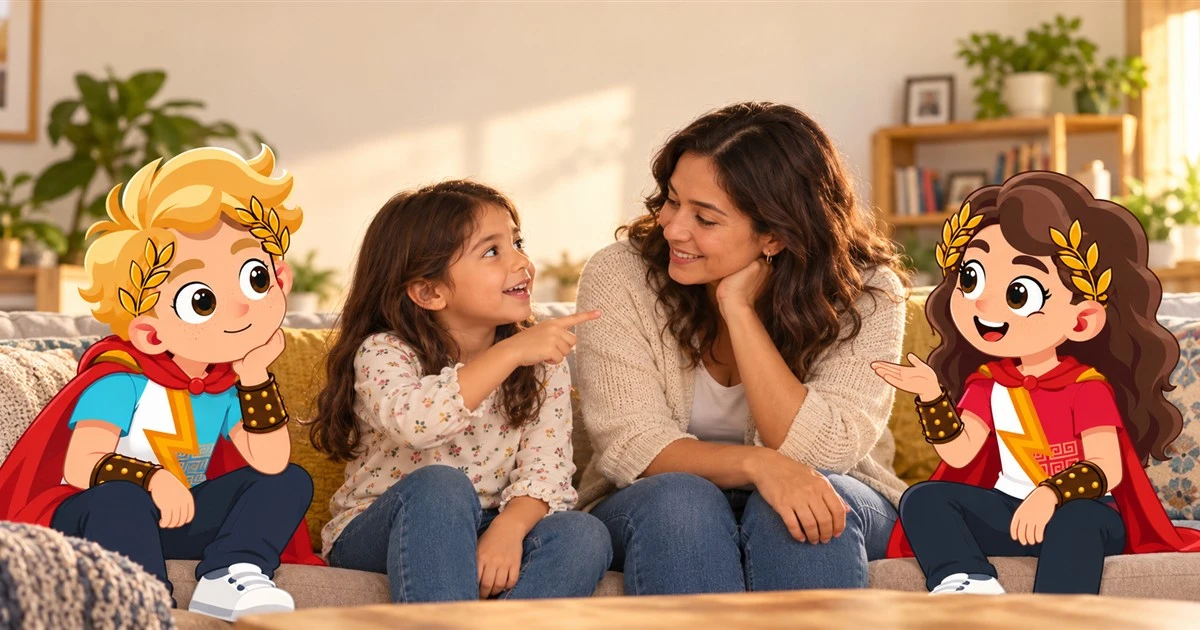
- Acknowledge the question with a short sentence: "Good question. You'd like to have it."
- Explain your family's decision: "We choose to spend on other things, like vacations or school."
- Offer a different view: "Every family chooses differently. We choose this."
- Ask: "What do you think matters most to us?" Listen to their answer.
Adapt the depth: at ages 4 to 6 one sentence is enough; at 7 to 10 they can understand more about priorities and effort.
What it's for
For your child: they learn that differences between families are decisions and not a lack, and that they can ask without fear. They feel safe with the truth. For you: you step out of shame or guilt for "not giving" what others have, and can answer calmly, which usually brings a lot of relief.
What the research says
Lieber argues that honesty about limits teaches values better than silence. Daniel Kahneman (Thinking, Fast and Slow) explains that we judge by what's in front of us ("what you see is all there is"): a child who only sees a house with lots of things concludes theirs "is missing." Carol Dweck (Mindset) shows that explaining without judging sustains self-esteem.
What you'll see over time
- First weeks: they repeat your phrase when talking with friends.
- One to three months: they ask less "why don't we have" and more "why do we choose."
- Long term: they grow up with their own values about what's worth buying and what isn't.
Signs it's working
They accept the answer without insisting; they explain to others why their family chooses differently; and they make comparisons with curiosity instead of envy. Every family chooses differently. We choose this.
Understand that each family decides differently what to buy.
Compare options and explain a decision.
Answer honestly, without excuses.
"Every family chooses differently. We choose this."
Most common error