Why Kids Learn Better From Characters Than From Lectures
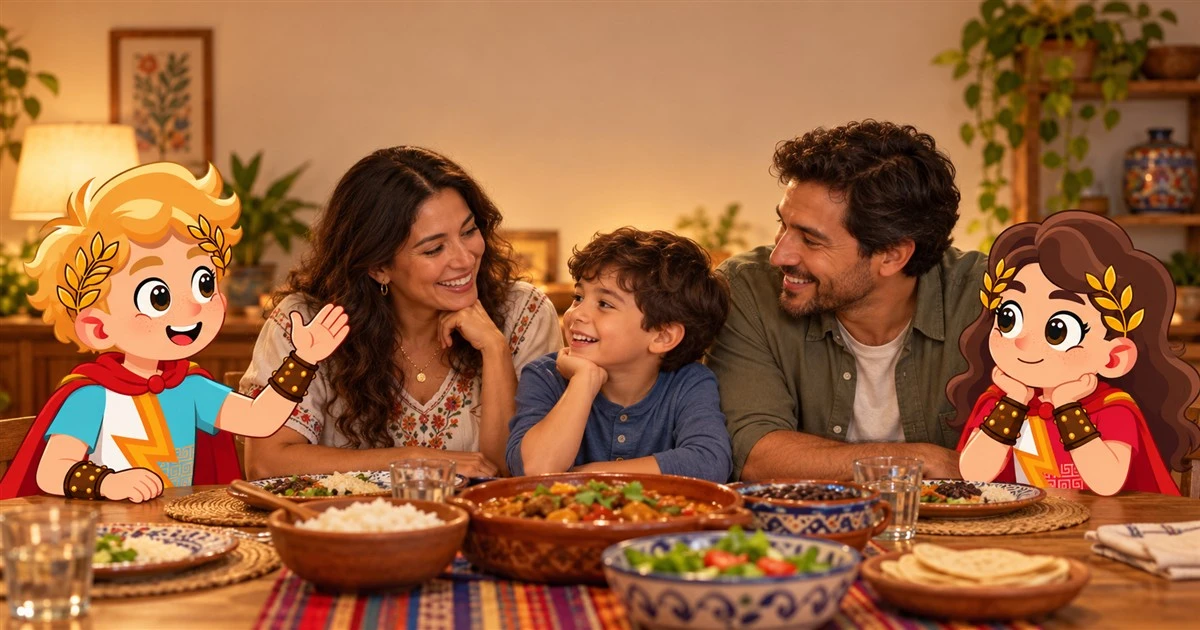
A lecture gives an instruction; a character shows a decision, with its doubt, its mistake and its fix. That's why a child repeats what a character said and forgets what you told them yesterday. The practice takes five minutes at dinner: invent a character like your child, give them a small dilemma, pause before the decision, let them slip and repair, and talk about what they felt.
How to do it
An example: "Once there was a 6-year-old girl who had 4 dollars and wanted two things." You ask your child to decide for her. If the toy takes the money and there's none left for Saturday's outing, you ask: "What could she do now?" The question asks for a solution, not blame.
What it's for
For your child, the mistake stays with the character and not with them, so they can think about it without defending themselves. They feel safe to give an opinion and to try different endings, and that is the training for deciding. For you, you drop the role of the one who scolds. Instead of "I told you so," you ask "what would she do?", and the tension drops.
What the research says
Bandura, Ross and Ross (1961) showed that children repeat behaviors seen in a model, even when the model is gone. That study was about aggression, but the principle of learning by observation applies to other behaviors. Chip and Dan Heath, in Made to Stick, argue that an idea inside a concrete story is remembered more than an abstract one. Carol Dweck, in Mindset, describes how watching others learn from their mistakes helps tolerate your own.
What you'll see over time
At first the child wants the character to "always win." Let them, and ask what would happen next. Between one and six months they quote the character at the store: "Like the girl, I'd better wait." In the long run they invent their own stories with dilemmas, which shows they understood the decision and not just the story.
Signs it's working
You'll know when they ask you for the story, when they change the ending with reasons and when they use a character's phrase in a real situation. If they get bored, shorten the story and put the dilemma in the first sentence.
Understand that observing a decision helps you make another.
Use five-minute stories to talk about decisions.
Propose a different ending with reasons.
"A story shows the decision; a lecture only names it."
Most common error
Try it here too
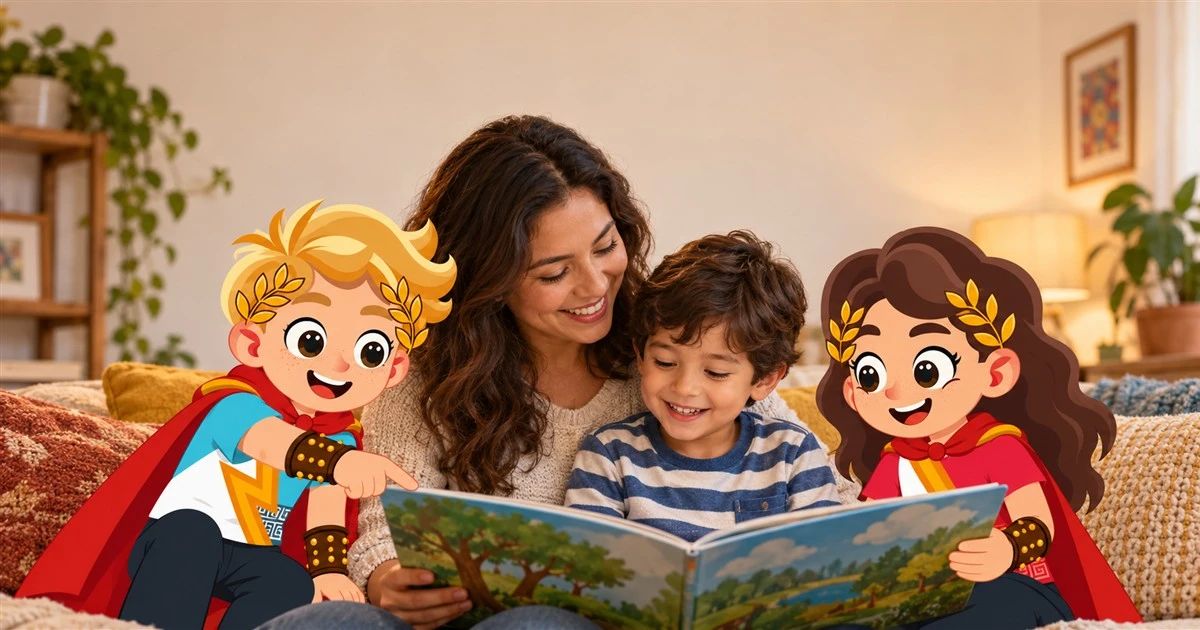
To read together: the illustrated book Beyond Money uses characters to talk about decisions and emotions. https://a.co/d/079Rfq6C