What to Expect in the First Month With Ploutus Lab
The first month is for building the habit, not for seeing big results. Morgan Housel, in The Psychology of Money, writes that what weighs over time is consistency, and that we tend to underestimate what a few months of repetition achieve and overestimate what one week does. What you can expect are small changes: new questions, more thoughtful decisions and more frequent conversations.
How to do it
In the first week you get to know the routine: one class per weekday, with its sheet and a question at the end. It's normal for the child to get distracted at first. Keep the time fixed and adjust the hour if needed, not the number of classes. In the second week the first questions begin: why we buy something or how much it costs. That question signals the idea landed. Answer with another: "What do you think?"
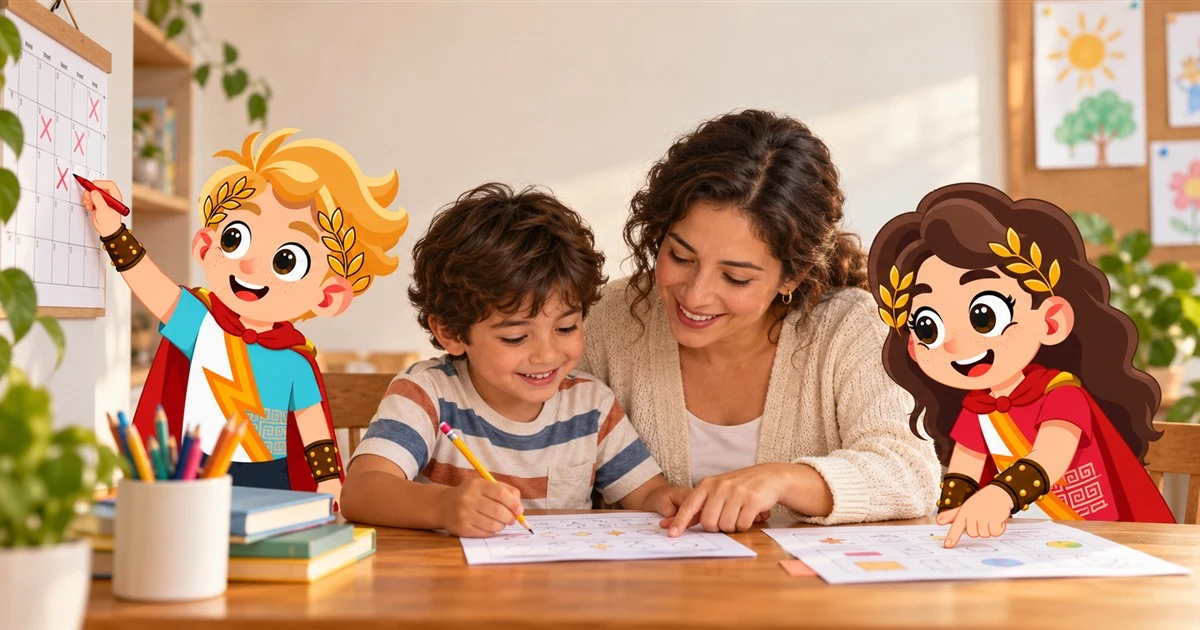
In weeks three and four you practice at home. Ask them to explain a decision in their own words and review the finished sheets together. That's where you see how far they've come.
During the month it helps to note a few signs: that they use a class word in another conversation, that they ask "do I need it or want it?" before asking for something, that they ask for the next class on their own and that the gamified quiz shows they remember more ideas than the week before.
What it's for
For your child, the first month is the stage where the routine becomes familiar and they start asking questions of their own. For you, it's the moment to decide with data from your home and not with the impression of the first week.
What the research says
On day 30, Carol Dweck, in Mindset, recommends looking at progress by comparing the person with their earlier self. Compare the first sheet with the last, review what the quiz showed week by week and your notes. If there's attention, questions and a routine that fits your home, continue. If it doesn't fit, cancel: the following month isn't charged.
What you'll see over time
In the first weeks the risk is expecting big changes and leaving the program too soon. Between one and six months what you see are questions, more thoughtful decisions and less resistance at the time. In the long run, the habit of thinking before deciding is what stays.
Signs it's working
You know the first month worked when your child asks for the class without being reminded, when they ask money questions and when their quiz shows more remembered ideas than at the start.
Understand that a habit is built little by little.
Keep one class per weekday during the first month.
Explain a decision in their own words.
"One month builds the habit of thinking before deciding."
Most common error