What to Do When Your Child Asks for “One More Toy” for the Tenth Time
Getting tired of saying no is normal: saying it ten times in a week wears anyone out. The repetition isn't bad parenting, it's a sign that the rule isn't clear yet. A stable rule becomes automatic (James Clear, Atomic Habits); a negotiable one invites negotiating.
How to do it: four steps
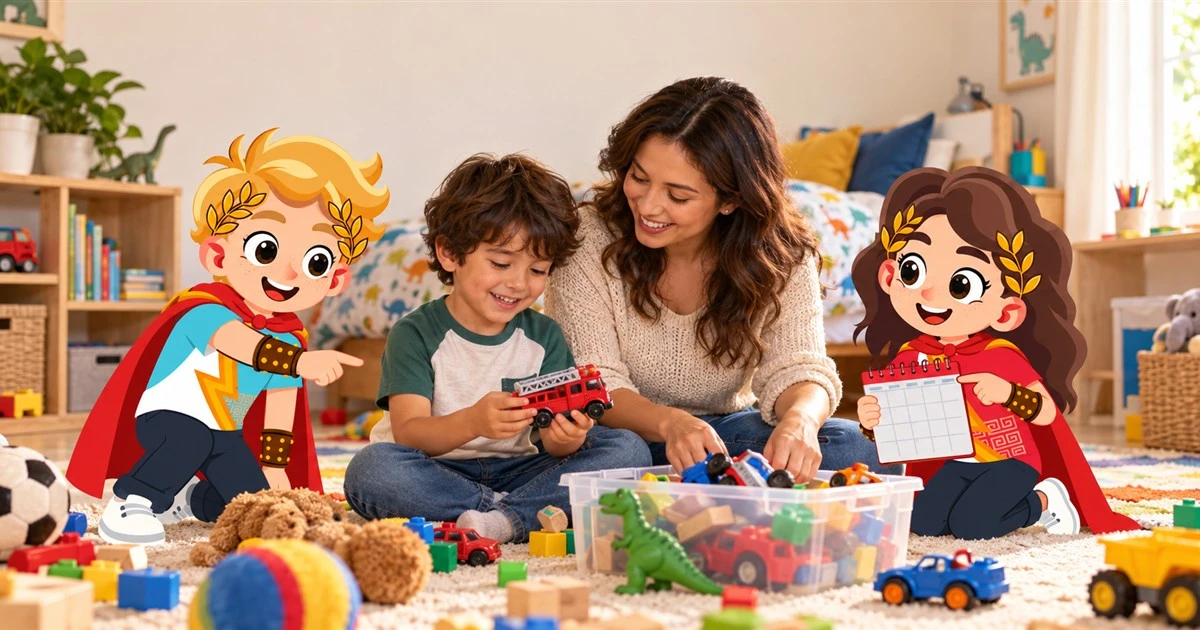
- Review what toys they already have. Take them out and look together: "You have eight things you hardly use. Which do you like most?"
- Set a day for new toys: for example, "birthdays and the first Saturday of the month." Make it a fixed day.
- Repeat the rule calmly when they insist: "New toys have their day. Today we play with the ones we have."
- Offer a different activity: painting, building a fort, going to the park.
What it's for
For your child: they learn that waiting has a known end and that what they have is worth something. They feel safe with a clear rule. For you: you stop deciding each time; the rule sets the limit, not your tiredness.
What the research says
Dauch and colleagues (2018) observed that young children played longer and more creatively when fewer toys were available. Mischel (The Marshmallow Test) shows that waiting improves with a strategy, and the "day for new things" is one. Gerald Patterson described that giving in to insistence reinforces it.
What you'll see over time
- First weeks: they insist a few more times, to test the rule; keeping it is the key.
- One to three months: they ask to "wait until Saturday" and play longer with what they have.
- Long term: they tell having from using, the base of any purchase decision.
Signs it's working
Fewer requests per week; longer play; and the "for toy day" list holds fewer things over time. If the rule slips, go back to it the next day, without a lecture.
Understand that waiting for something is part of deciding.
Have a fixed day for asking for or buying new things.
Accept a rule without arguing every time.
"New toys have their day. Today we play with what we have."
Most common error