📝
7-10 years
3 minutes
0
The Spending Stoplight— an easy guide for kids (and parents)!
Does your child ask for everything they see? With the spending stoplight, they'll learn to differentiate what's important, making better money decisions.
Oh, moms and dads! How many times have we heard "I want it!" as soon as we walk into a store? It's normal to feel like our kids live in a world of instant gratification. But what if we told you we can give them a simple tool to help them decide what's important and what's not? Today, I present the "Spending Stoplight," a super visual and fun method to teach them how to prioritize.
What is the spending stoplight and how does it work?
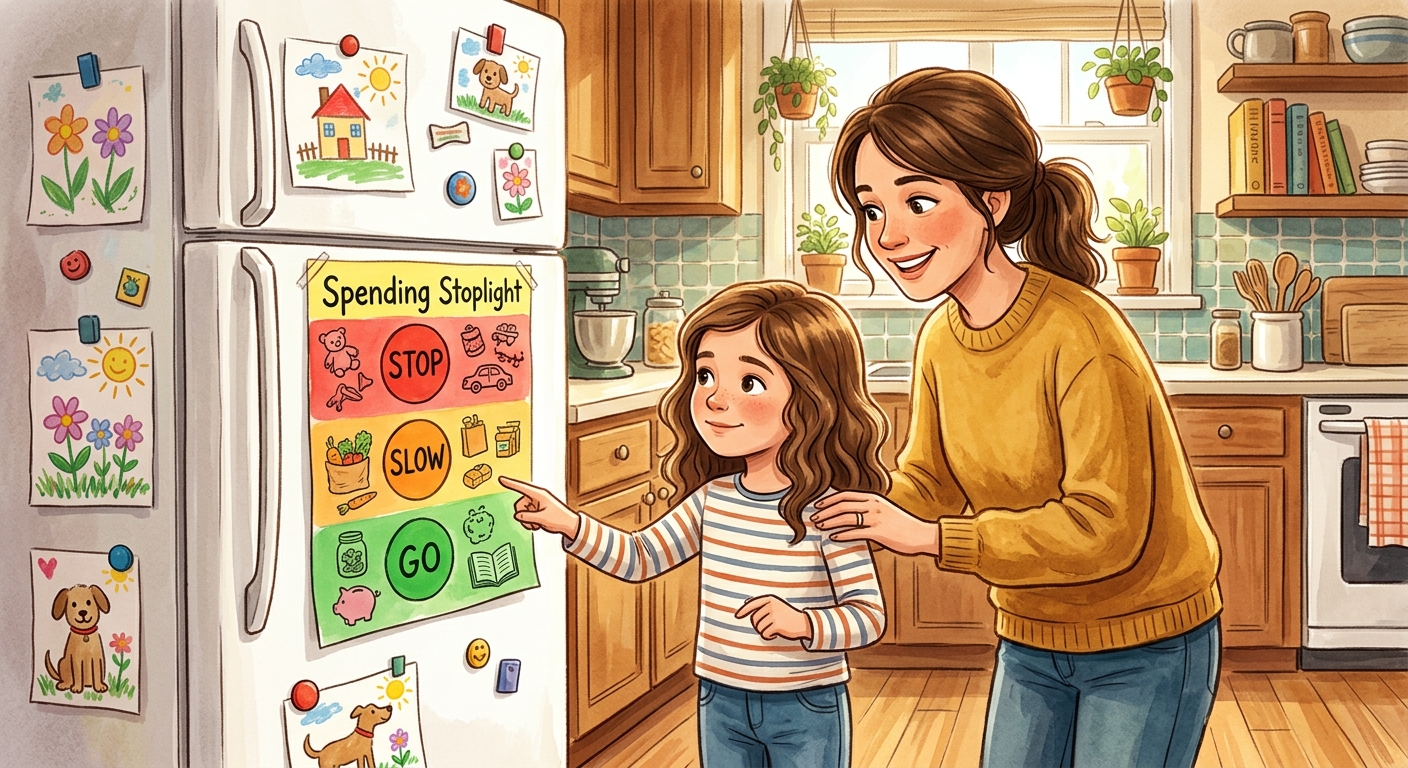
Imagine a stoplight, but for their money decisions. It's a simple system that helps them understand when to spend, when to save, and when to stop.- Green Light — Needs! These are the basic things we absolutely need. Think about food, school supplies, clothes. They are essential for a good life.
- Yellow Light — Wants! This is where desires come in, things we want but aren't urgent. A new toy, a special treat, a movie ticket. They can be obtained, but perhaps you need to save or wait a bit!
- Red Light — Unnecessary Expenses! These are impulses, things we buy without thinking and often don't even use. It's money that goes away without a good purpose. Avoid these!
Bring it home— the stoplight in action
The beauty of this method is its simplicity and that it can be applied in daily life.- Create your own stoplight: Draw or print one and stick it on the fridge or your child's room. It will be a constant reminder.
- Play to categorize: Every time your child wants something, ask them: "Is it a green, yellow, or red light?" Encourage them to explain their answer. You'll see how, little by little, they start to internalize these categories.
- Connect it with saving: If it's a "want" (yellow light), help them think about how they could save to get it. This reinforces the value of effort.
How to do it
1
Create a visual spending stoplight with your child
2
Classify daily expenses together into green, yellow, or red
3
Encourage your child to justify their spending decisions
4
Use the yellow light to motivate saving towards a want
What they are learning
Skill
Differentiate between needs, wants, and unnecessary expenses
Habit
Reflect before making a purchase decision
Concept
Understand the value of financial prioritization
Guiding phrase
"Learn to prioritize your spending with our financial stoplight"
Most common error
Many parents say "no" to everything without explaining why, causing children to get frustrated and not understand the value of money.
Keep practicing
The Magic Supermarket: Price Detectives and the Art of Saving
3 minutes · 7-10 years
The Goal Race — Saving Money is More Fun When It's a Game
4 minutes · 7-10 years
Back to blog
