How the System Adapts Material to Your Child's Age
Ploutus Lab uses the birth date on the profile to choose the range and show the matching classes and sheets. Beth Kobliner, in Make Your Kid a Money Genius, organizes financial education by stages, from preschool to college, because what a 5-year-old can do with a money idea is not what a 9-year-old can do.
How to do it
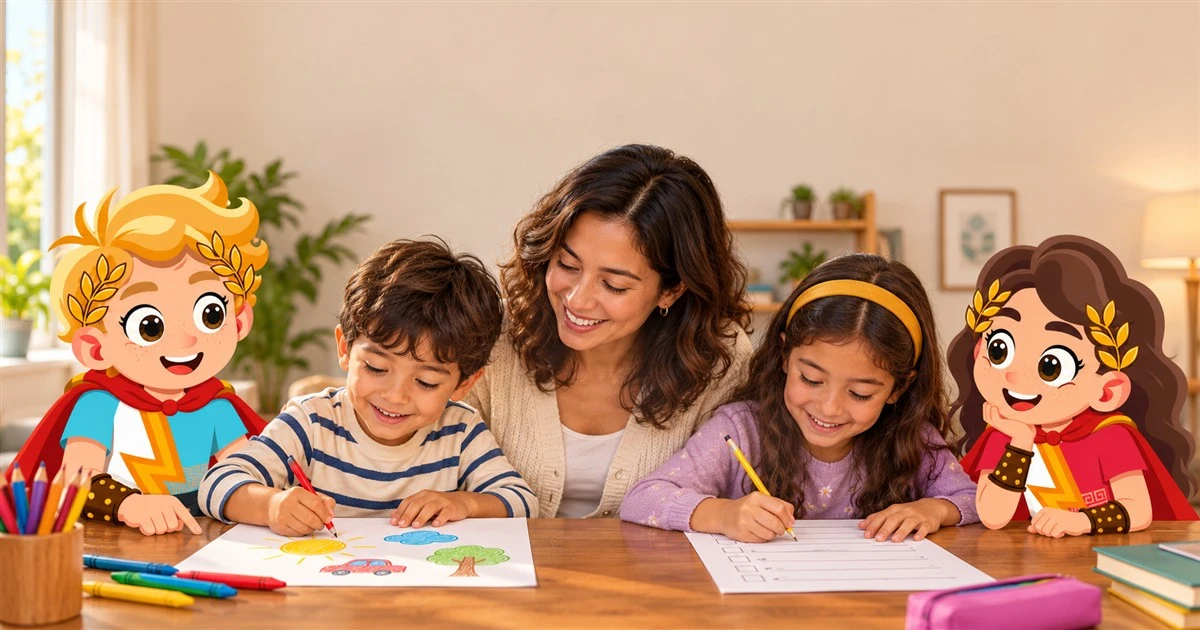
The 4-to-6 range brings more visual sheets, short sentences and home situations. The 7-to-10 range brings sheets with comparisons, causes and decisions with more than one option. The idea is the same in both. What changes is the presentation: the younger child works with objects, and the older one with situations and choices. A 5-year-old learns "trading something for something" with a pretend shop; a 9-year-old already asks why one thing costs more than another.
What it's for
For your child, the material reaches their level and they don't have to strain with something they don't understand or get bored with something they've mastered. For you, the profile's date is the main adjustment: if a sheet seems easy or hard, the first thing is to check the date.
What the research says
Mihaly Csikszentmihalyi, in Flow, explains that concentration appears when the challenge matches the skill. If the material is too easy, the child gets bored; if it's too hard, they get frustrated. In both cases they stop trying. That's why the birth date matters.
What you'll see over time
In the first weeks, if a sheet seems out of place, check the date before changing anything. Between one and six months the child moves from one range to the next as their answers show it, and you can notice it in the sheets. In the long run, with two kids in different ranges, each advances with their own material without you preparing different sheets.
Signs it's working
You know the material is right when the child answers without frustration and without boredom, and when their sheets are solved with an explanation and not with guessing.
Understand that the same idea is presented differently by age.
Check the profile's age from time to time.
Identify whether the material fits the child's age.
"The same idea, presented to fit each age."
Most common error