Kids' Cards: Pros and Cons for Financial Education
A card for kids manages money, and conversation teaches how to decide with it. They're different tools that can be used together. The pros are three: the card makes spending visible, because the child sees how much is left; it allows practicing limits, because a fixed amount forces choices; and it makes conversation easier, because transactions can be reviewed as a family.
How to do it
The cons are three as well. Drazen Prelec and George Loewenstein described the "pain of paying": handing over cash hurts more than swiping a card, which is why people spend less consciously with cards. A child feels it the same or more. Without conversation, the card is just a way to pay. And without review, it loses value.
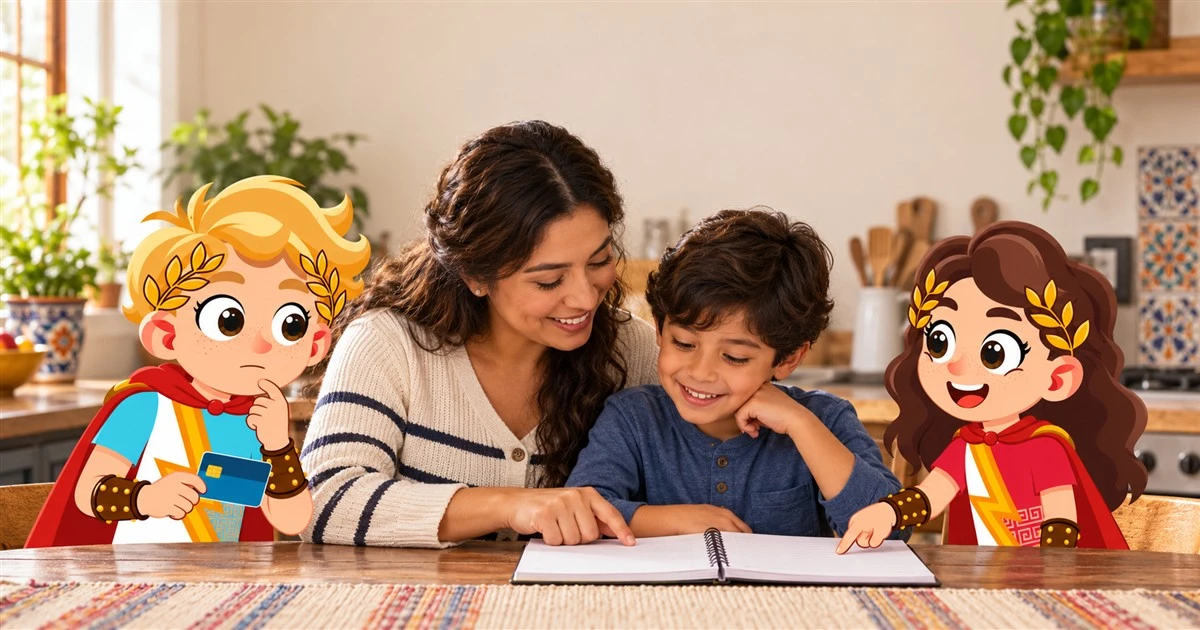
Before choosing, check the costs, the fees, the child's privacy and whether it lets the family see the transactions. If you decide to use one, start with a small amount and review the transactions together each week: "Why did you pay for that? Would you buy it again?" If they don't understand a charge, explain it as you would a cash purchase. In The Opposite of Spoiled, Ron Lieber recommends letting mistakes happen with small amounts, while they're still cheap.
What it's for
For your child, the card becomes a record of their own purchases, and they can see where money comes from and where it goes. For you, the card replaces arguing over every expense with reviewing the transactions, which is a moment of conversation and not of fighting.
What you'll see over time
In the first weeks the child may want to spend the whole amount in a day; that's part of the learning and gets reviewed at the end. Between one and six months they explain the charges in their own words and ask before paying. In the long run they understand that paying by card is also spending.
Signs it's working
It's working when they explain a purchase, when they pause before using the card and when the weekly review becomes a routine they take part in.
Understand that paying by card is also spending money.
Review the transactions as a family each week.
Explain a purchase in their own words.
"The card shows the spending, conversation gives it meaning."
Most common error