Three Money Mistakes Moms Make That Their Kids Repeat (Without Guilt)
Children learn more from what they see than from what they hear: Albert Bandura showed it decades ago. If you spend on impulse, they copy it. If you avoid talking about money, so do they. This isn't an accusation: it's a concrete opportunity, because habits can change. Carol Dweck (Mindset) puts it this way: a habit isn't a fixed trait, it changes with practice. Here are three common mistakes, with their how and their why.
Mistake 1: buying to soothe tiredness
How to fix it: name the tiredness out loud ("I'm exhausted, that's why I want to buy this") and ask whether the purchase is needed. Postpone it a day. Why: your child learns that feelings are attended to without money, and you regain control of the purchase.
Mistake 2: not showing how you decide
How to fix it: say out loud why you choose something, even small: "I choose this brand because it costs less and works the same." Why: your child sees the purchases, but doesn't see the reasoning unless you say it; that reasoning is what they copy.
Mistake 3: not reviewing spending
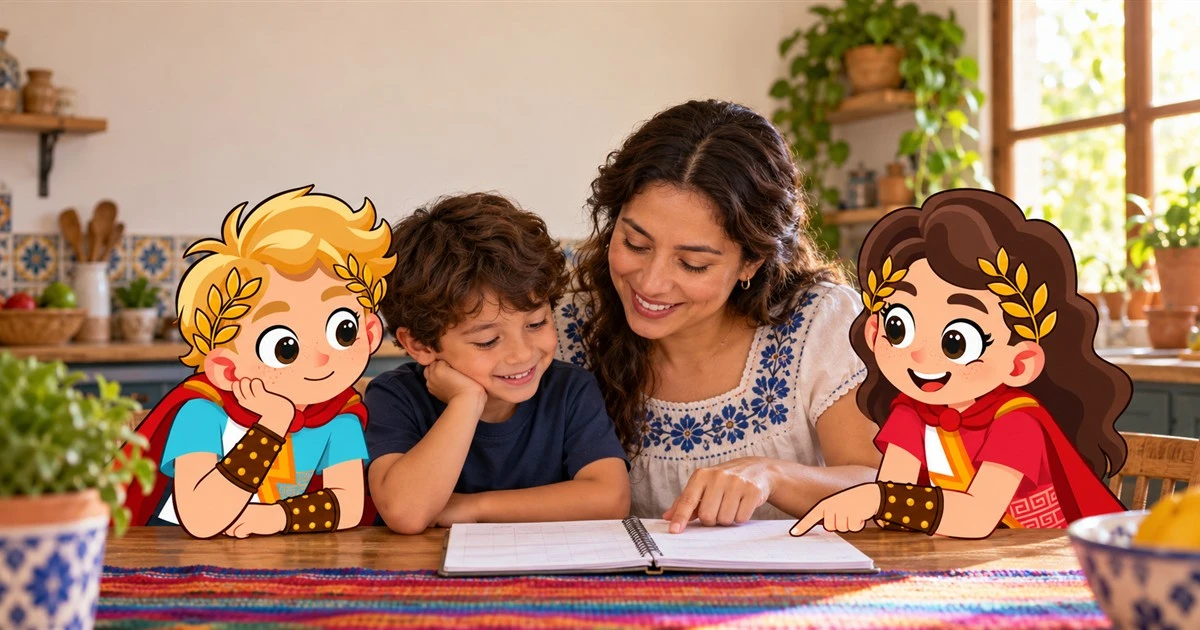
How to fix it: once a week, review a short list of what was spent with your child: three things, not twenty. "Where did most of it go? What would you change?" Why: spending stops being invisible and they learn that reviewing is normal, not a punishment.
How to do it without overwhelm
James Clear (Atomic Habits) recommends changing one habit at a time and making it so small it's easy to keep. Choose the mistake that worries you most and work on it for two weeks before the next. Fixing a habit isn't failing: it's teaching that decisions can get better.
What you'll see over time
- First weeks: your child repeats your phrases ("I choose this one because it costs less").
- Three to six months: they review spending with you naturally and name their own tiredness or anger before asking for something.
- Long term: they grow up with a model of an adult who decides calmly, which is what Bandura showed gets copied.
Signs it's working
Your impulse purchases go down; your child asks why you choose what you choose; and money arguments become conversations. If it's hard, ask your child to remind you of the phrase: they feel part of the change.
Understand that money habits are learned by watching.
Review spending once a week.
Explain a purchase decision in their own words.
"Fixing a habit is also a way of teaching."
Most common error