Money Videos for Kids: How to Choose One That Actually Teaches
A video teaches when it leaves an idea the child can tell without watching it again. For that to happen there are two decisions: choosing the video well and watching it together. To choose it, check five signs: one single idea, an everyday example, a question for the child, a clear ending that doesn't chain into another video and a tone that doesn't scare or promise riches.
How to do it
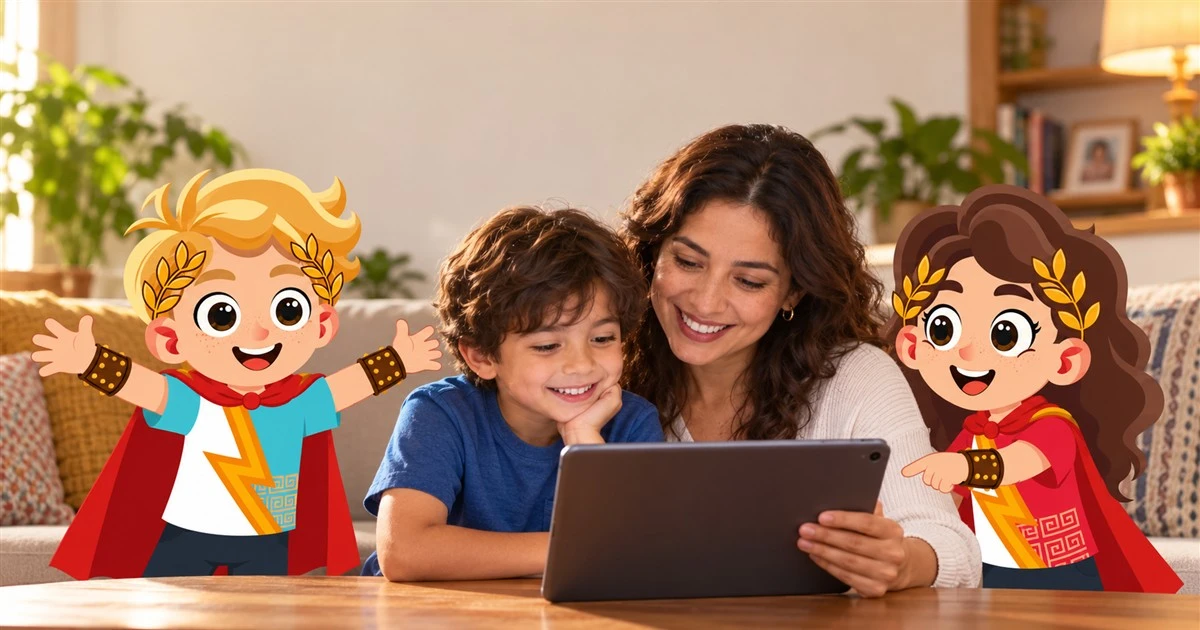
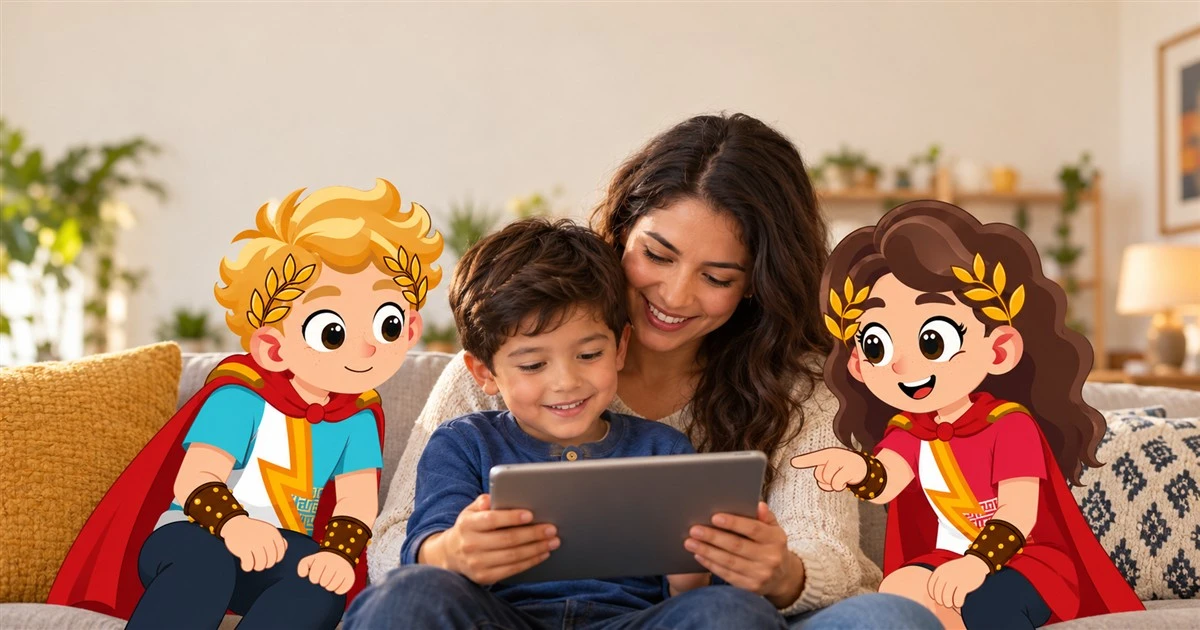
To watch it together, watch it with your child the first time and pause when the character asks something. When it ends, ask: "What happened? What did they decide? What would you do?" The next day, without the video, ask whether they remember the decision. If they do, the video taught. If not, watch it again and repeat the question.
An example: a character sells lemonade and decides to save part of what they earn. The next day you ask: "Why did they save part of it?"
What it's for
For your child, the screen becomes a starting point for thinking. They feel heard when you ask what they'd do, and proud when they remember. For you, the doubt about whether the video helps disappears, because you have a simple test and a dinner topic that doesn't sound like a lecture.
What the research says
The American Academy of Pediatrics, in Media and Young Minds (2016), recommends quality programming for young children, watched with an adult who connects the content to their life. Roediger and Karpicke showed that trying to recall fixes learning more than looking again. Brown, Roediger and McDaniel call it retrieval practice in Make It Stick. That's why the next-day question weighs more than a second playback.
What you'll see over time
In the first weeks the child answers "I don't know" or tells only the funny part. Keep asking. Between one and six months they remember the character's decision and compare it with their own. In the long run they ask for videos that "teach something" and discard the ones that only entertain.
Signs it's working
It's working when they tell the idea without help, when they use it in a real situation and when they ask for the next video because they want to know what happens. If they only ask for more screen, the video entertained but didn't teach, and it's worth changing content.
Understand that entertaining is not the same as teaching.
Ask the next day what they remember.
Evaluate whether a video leaves a concrete idea.
"The next-day question weighs more than a second playback."
Most common error