📝
6-12 years
5 minutes
0
Debts and Expenses at Home—How to Talk to Your Kids?
Afraid to discuss debts with your kids? Learn how to do it without scaring them, turning the topic into a valuable lesson for their future.
Oh, money. Do you sometimes feel a knot in your stomach just thinking about it? And when it comes to debts or unexpected expenses at home, the first reaction is to want to shield our children from these "adult worries." We think: “I don't want to scare them; let them enjoy their childhood peacefully.”
But what if I told you your children already notice? Children are like sponges; they absorb our emotions, the tone of voice when talking about money, or even the absence of certain things. A study by the University of Cambridge revealed that, even at an early age, children can sense financial tension in the home, even if they don't understand the details. Ignoring the topic doesn't protect them; it only leaves them without tools to understand and manage these situations in the future.
Why talking about money isn't scaring, but empowering
It's not about venting to them about your economic problems, but about teaching them how the real world works. It's a golden opportunity to build their financial resilience. How?- **Differentiate between "our" and "your" responsibility:** Explain that debts are commitments adults take on and that there are plans to manage them. For example, "Mom and Dad have a plan to pay for the new car; it's an investment for the family."
- **Needs vs. wants—the priority game:** Use simple examples. "Today, we need to buy food and pay for electricity before that new toy, right?" Teach them to prioritize with a budget, even with their piggy bank.
- **The power of solution and effort:** If there's an unexpected expense, involve the children in finding simple solutions. "How about we save electricity by turning off the lights when leaving the room?" This shows them that problems have solutions and that collective effort helps.
3 secrets to discuss expenses without drama
For these conversations to flow and be truly educational, keep these points in mind:- **Age-appropriate honesty:** Don't lie, but don't give overwhelming details either. If they ask why they can't buy something, you can say, "For now, we're using that money for something more important, like fixing the fridge. We can save for that later."
- **Money is a tool, not a monster:** Normalize the topic. Money serves many purposes, good and not-so-good. The important thing is to learn how to manage it.
- **Encourage curiosity and questions:** Encourage them to ask about how money works, saving, and expenses. Create an environment where money isn't a taboo.
How to do it
1
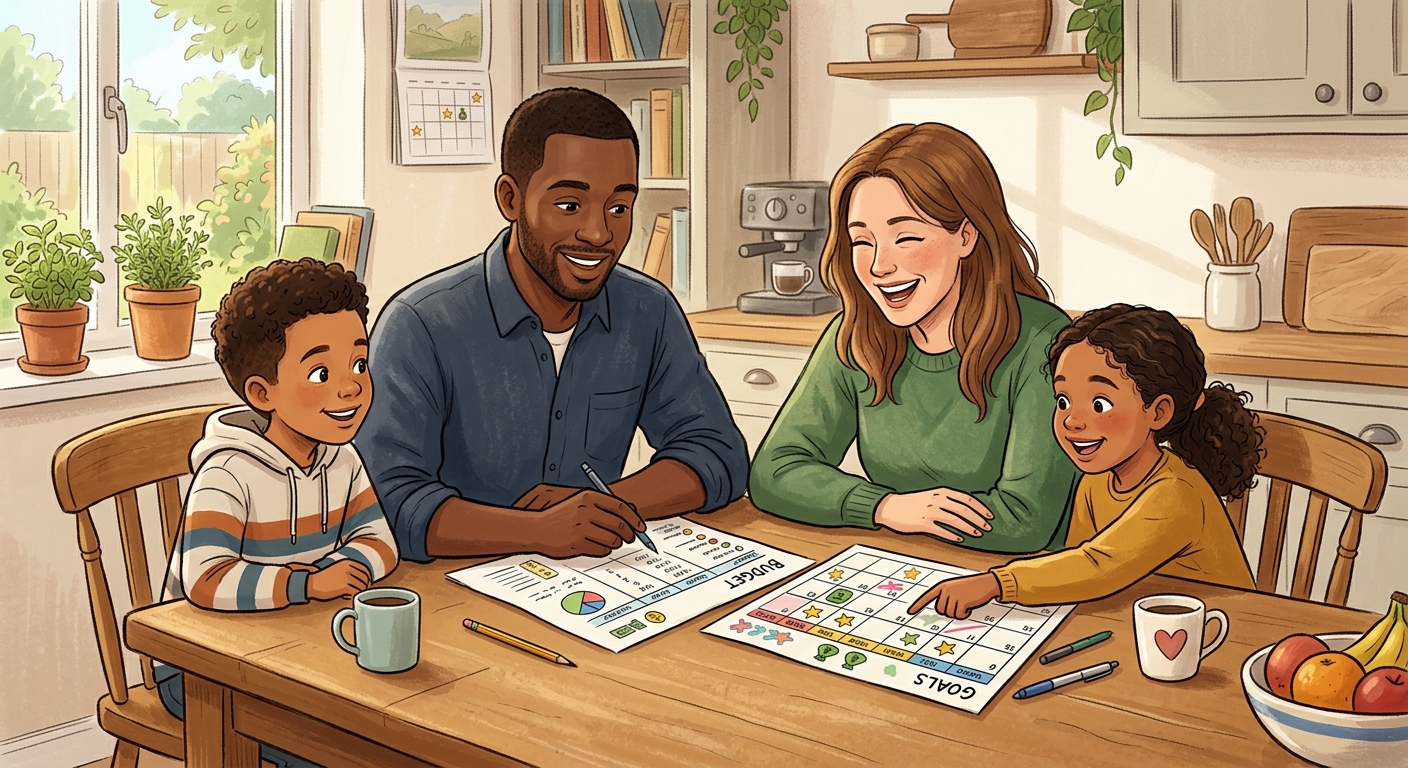
Create a "Simple Family Budget" with them.
2
Play "Needs vs. Wants" with daily examples.
3
Share solutions for unexpected expenses.
4
Answer their money questions honestly.
5
Celebrate small financial achievements together.
What they are learning
Skill
Learn to differentiate needs from wants
Mindset
Develop financial resilience
Knowledge
Understand the basic concept of family debt
Guiding phrase
"Talking about money is the first step to mastering it."
Most common error
Parents avoid discussing money or debts to "protect" their children, believing it keeps them from worrying.
Keep practicing
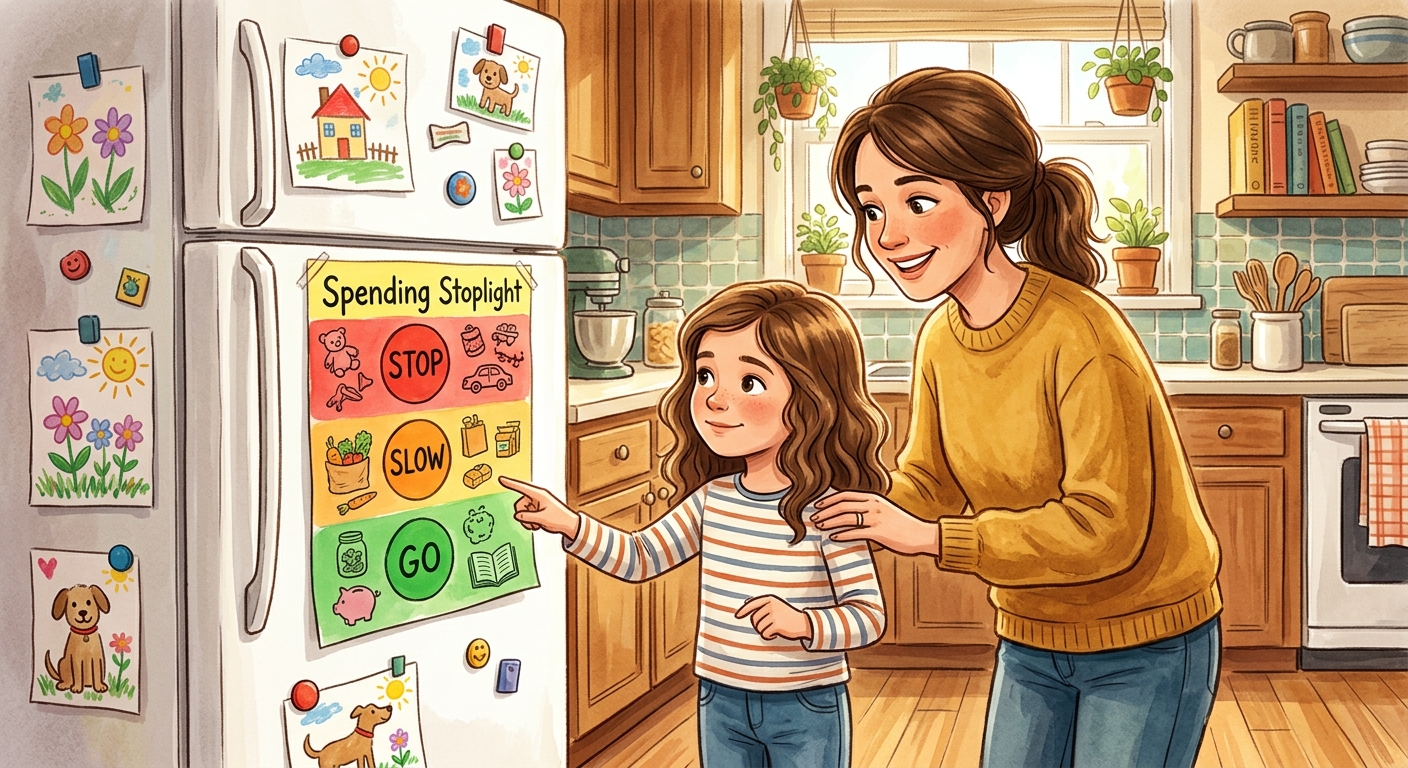
The Spending Stoplight— an easy guide for kids (and parents)!
3 minutes · 7-10 years
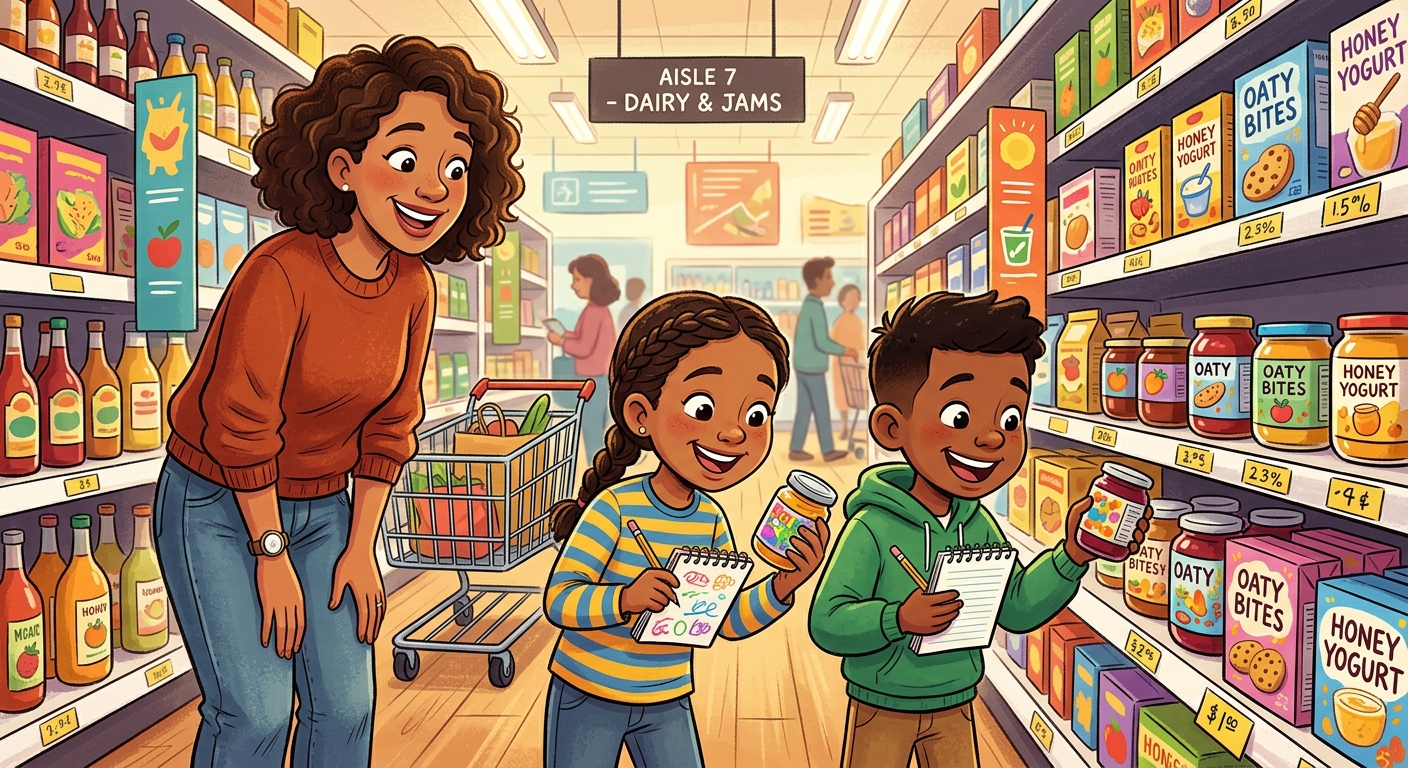
The Magic Supermarket: Price Detectives and the Art of Saving
3 minutes · 7-10 years
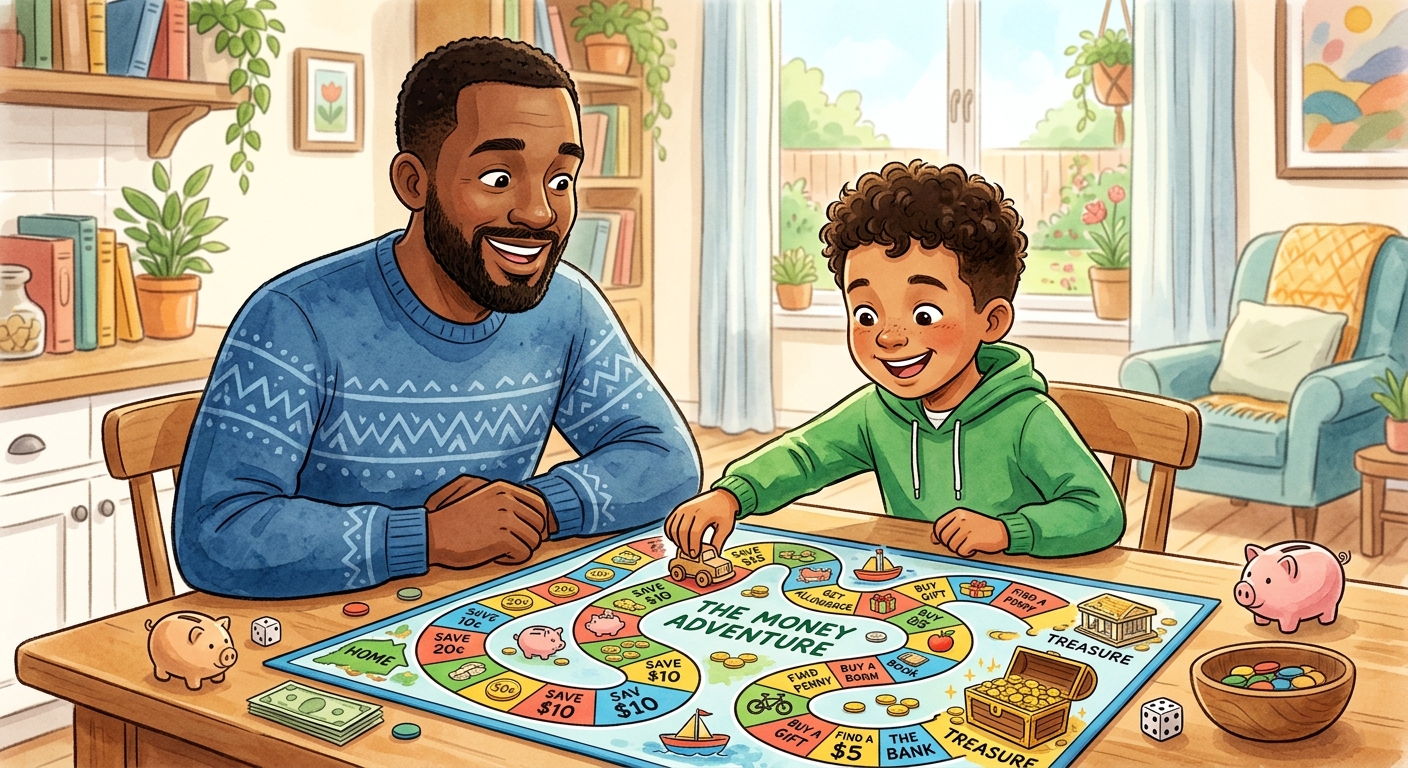
The Goal Race — Saving Money is More Fun When It's a Game
4 minutes · 7-10 years
Back to blog
