Your First Week With Ploutus Lab: What to Do and in What Order
The first week isn't for learning a lot; it's for making the class part of the day. Each class runs three to four minutes, and James Clear, in Atomic Habits, explains that a habit sticks when it's so small it takes almost no effort to start and when it's attached to something you already do. The order is this.
How to do it
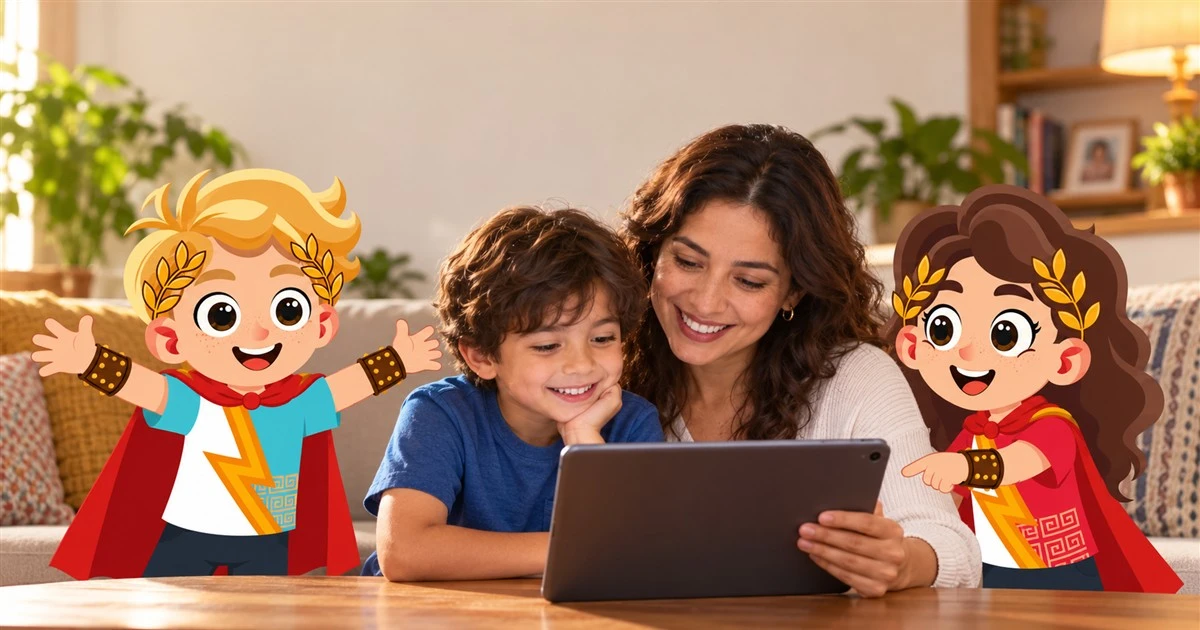
Days one and two are for the profile, the time and the place. You create one profile per child with their birth date, and write one concrete sentence: "After snack, we watch one class at the kitchen table." With a time, a place and a trigger, the daily question of whether we do it today disappears. The first class is watched together, with the sheet and a pencil on the table.
From day three to five, one class a day and a single question when it ends: "What did Skipper decide, and what would you have done?" You listen without correcting. Children learn a lot from watching someone else decide, according to Bandura, and the question gives them their turn. If a day falls apart, Clear's rule is never to miss twice in a row.
On days six and seven, ask them to explain the class they liked best, as if you hadn't seen it. Explaining forces them to organize the idea, and that's where it sticks.
What it's for
For your child, the week is a routine they learn to recognize. For you, it's a way to see how they respond without expecting changes in money.
What you'll see over time
In the first week what you observe are small things: they show up on time, they answer the question, they repeat a new word like "income" or "risk." Between one and six months those small things become habits. In the long run the first week is the point where the routine began.
Signs it's working
You know the first week worked when the child shows up on time without being reminded, when they answer the closing question and when they repeat a word from the class.
Understand that a small habit attached to something daily holds.
Keep a daily class from the first week.
Explain a class they watched in their own words.
"The first week is for making the class part of the day."
Most common error